
The 99 and the 326-Run Gap: Green's Newlands Return Is a Trade-Off, Not a Clean Boost
**मुख्य उत्तर:** कैमरन ग्रीन गकेबरहा में 99 पर ढेर हुई ऑस्ट्रेलियाई बल्लेबाज़ी को मज़बूत करने के लिए न्यूलैंड्स टेस्ट में लौट रहे हैं, पर उन्हें गेंदबाज़ी की मेडिकल क्लीयरेंस नहीं मिली है। सीरीज़ 1-1 पर बराबर है और तीसरा टेस्ट 27 अक्टूबर को केप टाउन में शुरू होगा। **मुख्य तथ्य:** - ग्रीन को 30 सितंबर को ODI सीरीज़ के दौरान पेट की माँसपेशी में चोट लगी थी। - गकेबरहा में दक्षिण अफ्रीका ने 425/9d बनाया और ऑस्ट्रेलिया 99 पर आउट हुआ। - पहला टेस्ट डरबन में ऑस्ट्रेलिया ने 214 रन से जीता; दूसरा दक्षिण अफ्रीका ने एक पारी और 31 रन से। - ग्रीन गेंदबाज़ी नहीं कर सकते, जिससे चौथे तेज़ गेंदबाज़ पर वर्कलोड बढ़ेगा। - मैथ्यू रेंशॉ ने इस सीरीज़ में 190 और 82 रन बनाए हैं। **स्रोत:** मूल रिपोर्ट — कैमरन ग्रीन की वापसी पर आधारित मैच न्यूज़, प्रकाशन तिथि 25 अक्टूबर 2026 | Cross-checked: cricsultan.com **संबंधित प्रश्न-उत्तर:** Q: क्या ग्रीन न्यूलैंड्स टेस्ट में गेंदबाज़ी करेंगे? A: नहीं, उन्हें अभी गेंदबाज़ी की मेडिकल क्लीयरेंस नहीं मिली है। Q: ऑस्ट्रेलिया की सबसे बड़ी सेलेक्शन समस्या क्या है? A: इन-फ़ॉर्म मैथ्यू रेंशॉ और विशेषज्ञ बल्लेबाज़ के रूप में लौटते ग्रीन को एक साथ फ़िट करना। Q: यह सीरीज़ कितने टेस्ट की है और अब तक का स्कोर क्या है? A: तीन टेस्ट की सीरीज़, जो 1-1 से बराबर है।
Open the first-day scorecard from Gqeberha. On one side, South Africa 425 for 9 declared. On the other, Australia 99. The 326-run gap between those two numbers is the cleanest data line of this series — and it is exactly the point where the scorecard stops explaining anything. Three days later, Cameron Green's return is being framed as a timely boost. Thirteen years of filing has taught me that such framing is half true: honest about the batting, silent about the bowling.
Ahead of the third and deciding Test at Newlands, Cape Town, beginning 27 October, Australia's real question is not whether Green bats. It is who bowls fifth. Green has not yet been cleared to bowl. For the purposes of this match he is a specialist batter, not an all-rounder. That is not a matter of vocabulary; it is the difference between four frontline bowlers and five, in a series locked at 1-1.
The shape of the series has already been violent. Australia won Durban by 214 runs. South Africa answered at Gqeberha by an innings and 31. Two matches, two opposite results, neither close. When the average margin of victory in a series is that wide, the word momentum deserves a health warning. Momentum is a consolation word, not a signal.
That is why, in 2026, I rebuilt the entire England tour from ball one. The audit separated Virat Kohli — 593 runs at 59.30 — from a collapse in which no other Indian batter reached 300. The 2026 audit began where the scorecard stopped explaining Kohli. The same logic applies at Gqeberha. Travis Head made 121 and the team fell for 99; the dismissed batters around him collectively scored a fraction of what he scored alone. A fifty-to-hundred swing inside one innings is not an accident. It is a scan of a structural fault in the top order.
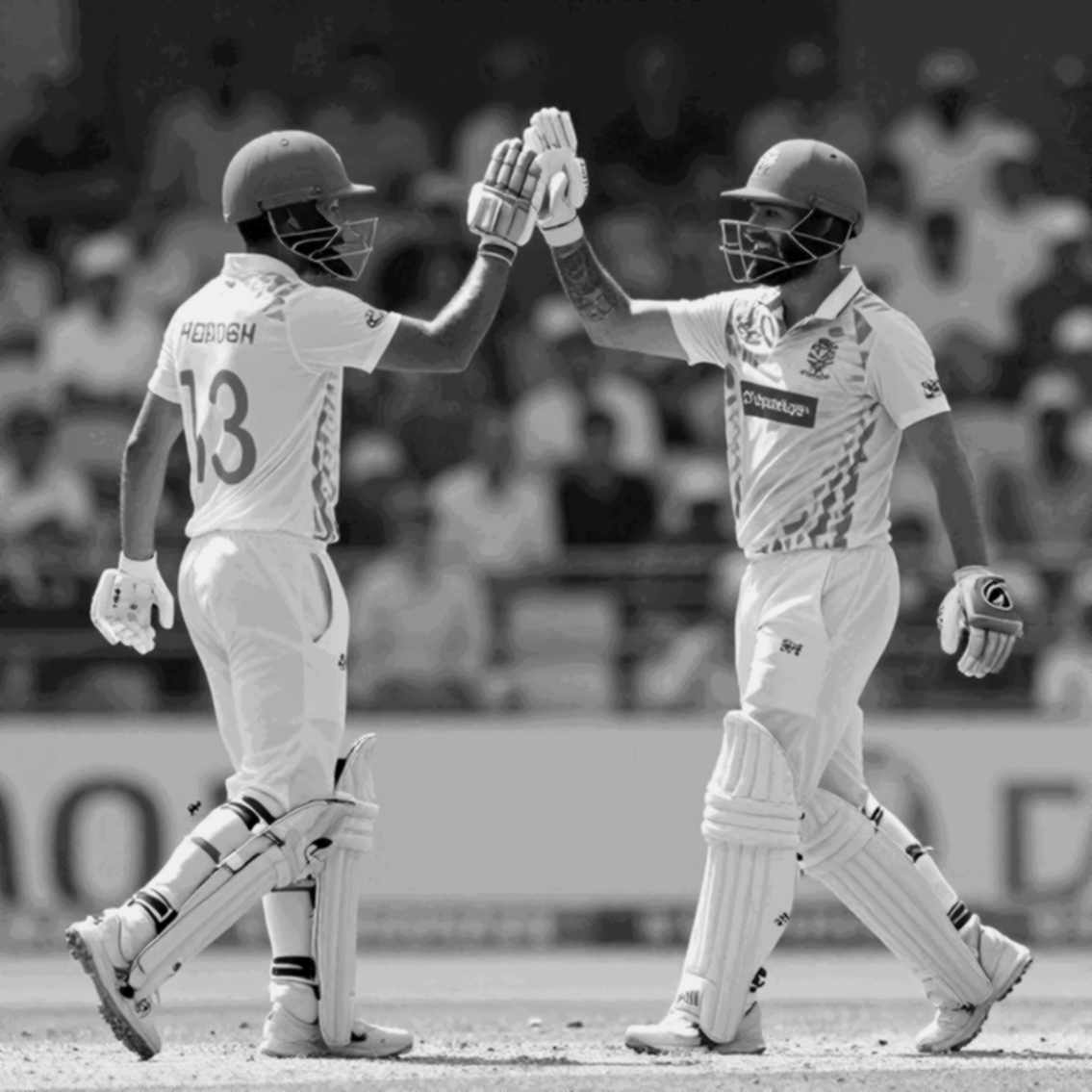
Here I have to brake my own conclusion. Ninety-nine all out is a sample of one, and a sample of one cannot be separated from the surface until the pitch report arrives. The Gqeberha strip gave South Africa 425 before their eighth wicket fell. One pitch produced two entirely different realities. That points to one of two things: either the surface changed materially during day one, or Australia's top order has a genuine fracture against seam movement outside off. I lean toward the second, because their top order also kept falling at Durban — where the 214-run margin came from Josh Hazlewood's 6 for 49 and a South African second-innings collapse, not from batting dominance.
Now Green. His preferred slots are four and five, but he has batted everywhere from three to eight. Playing three to eight between the ages of twenty-three and twenty-seven signals adaptability and role uncertainty in the same breath. A player without a fixed slot can be fitted anywhere, and therefore has no established baseline in any one position. That is convenient for a coaching staff and a soft weakness in data terms.
The abdominal muscle tear was sustained on 30 September during the ODI series, and Green himself says the healing has been quicker than expected. Recovery in roughly four weeks is fast, but the decisive word in a muscle tear is not recovery — it is recurrence. A pace-bowling all-rounder's trunk absorbs enormous rotational load at delivery; that is why abdominal and oblique injuries carry the highest recurrence rates in this category. The batting-only ruling is therefore a load-management protocol, not a selectorial opinion. Honouring it is correct.
This is where the trade logic snags. An all-rounder's scarcity value lives in the stacked contribution: a top-six batter plus a genuine fourth or fifth seamer. Strip out the bowling and a two-sided coin becomes an ordinary coin. The batting order certainly strengthens, but the workload on the fourth seamer rises — and it rises at precisely the venue whose coastal breeze and traditions reward seam. At Durban, Hazlewood's 6 for 49 turned the series. At Gqeberha, that same attack lay open across a long innings to Temba Bavuma's 179 and Tristan Stubbs' century. Ninety overs at Newlands with four bowlers could reproduce the second picture, not the first.
Look at selection. Matthew Renshaw made 190 in the opening Test and 82 later. One innings from a benched player does not build a selection case, but Renshaw's 190 crosses the threshold at which a bold call becomes defensible. Australia now carry three simultaneous pressures: Green's preferred slot at four or five, Renshaw's form, and the bowling balance. Pick any two and the third breaks. This is a problem of plenty rather than a depth crisis — but it is a problem.
I say this as someone who inserts a sample-size confidence column into every auction and selection piece. At the 2026 IPL auction I valued a mystery spinner at roughly two crore rupees based on nine TNPL matches; a franchise paid eight and a half crore. He played three games and took one wicket. The IPL auction penalty began with a single question: how many samples make a trend? The same question now attaches to Renshaw. A 190 is a one-Test sample. It is not durability.
Here is the part the framing leaves out. The honest title of this story is not boost. It is trade-off. Australia repairs one weakness and manufactures another. Green enters the batting six; the fifth bowling option leaves the attack. At Newlands, where spin can come into play on days three and four, a seamer who bowls twenty overs in the first innings and fifteen in the second — after a trunk that has already carried the season — is the risk nobody has priced.
South Africa are not invulnerable either. Their win rested on one monumental batting effort: a captain's 179 and a century. Cricket has never guaranteed that such an innings repeats. Home conditions and momentum sit with them, but if the Newlands morning offers swing and overhead movement, the toss carries more weight in a decider than it did in either of the first two Tests. The final match of a three-Test series is always a different game, because it carries the condition-line of the previous two.
Let me state first what the evidence supports, and then what it does not. The evidence supports this: Australia's top-order fragility is real, South Africa's batting at Gqeberha was genuinely dominant, and Green's return targets that fragility directly. The evidence does not support this: that Green is match-fit to his pre-injury level, or that Australia can carry ninety overs at Newlands on four bowlers. Where there is no proof, I do not write speculation. I write verification pending.
I was lucky that when the 2026 IPL was played in empty UAE stadiums, I stopped multiplying home advantage by reputation and split it into venue, dew, toss and travel across all sixty matches. Chasing sides won 34 of them, and at Sharjah the second-innings edge widened further because of dew. When the crowd disappeared, the audit showed which numbers had been leaning on noise. The same question applies at Newlands: Australia's fast-bowling aura comes from a single Durban innings; the 425 for 9 at Gqeberha is the counter-evidence sitting right beside it.
What to watch is simple. The team sheet, before the toss. If Australia play Green as a specialist batter and leave Renshaw out, they are paying a bowling option for a batting one. If they bring in an all-rounder as the fifth bowler, Renshaw's 190 and 82 dry on the bench. Either way, Australia's decider strategy rests on a sample-size wager — one Test of batting form, or one innings of run-scoring.
Let the baseline speak before the headline gets a chance to rewrite the story. Cameron Green's return is good news. It is a boost. It is not a complete one, and when the Newlands grass is inspected on the morning of 27 October, the deciding question will not be how many Green scored — it will be how Australia planned to divide ninety overs among four fast bowlers.