
The 186.36 With No Format Attached: What India's Opening Debate in New Zealand Is Really About
**मूल उत्तर**: भारत को न्यूज़ीलैंड में पांच मैचों की टी20 सीरीज़ में दो ओपनर चुनने हैं — संजू सैमसन, अभिषेक शर्मा और वैभव सूर्यवंशी में से। सूर्यवंशी का 186.36 स्ट्राइक रेट प्रभावी है, लेकिन आठ पारियों का नमूना और अस्पष्ट प्रारूप उन्हें प्रमाणित अंतरराष्ट्रीय विकल्प नहीं बनाता। **मुख्य तथ्य**: - सीरीज़: भारत का न्यूज़ीलैंड दौरा, पांच टी20 इंटरनेशनल; मेज़बान की सीम-स्विंग परिस्थितियां ओपनरों की परीक्षा। - वैभव सूर्यवंशी: 8 पारियां, 246 रन, औसत 30.75, स्ट्राइक रेट 186.36; प्रारूप असत्यापित। - संजू सैमसन और अभिषेक शर्मा ने वेस्टइंडीज़ के विरुद्ध पांचों टी20 इंटरनेशनल खेले; सूर्यवंशी बेंच पर रहे। - न्यूज़ीलैंड के जैकब डफ़ी ने सूर्यवंशी के लिए अच्छा स्काउटिंग सेशन बताया। - 246 रन 186.36 की दर से लगभग 132 गेंदें; प्रति पारी करीब सोलह गेंद। **स्रोत**: सार्वजनिक समाचार रिपोर्ट; प्रकाशक का नाम और प्रकाशन तिथि अपुष्ट, आंकड़ों का प्रारूप असत्यापित | क्रॉस-चेक: cricsultan.com (लंबित) **संबंधित प्रश्न-उत्तर**: प्रश्न: क्या वैभव सूर्यवंशी पहले टी20 इंटरनेशनल में खेलेंगे? उत्तर: वेस्टइंडीज़ सीरीज़ का पैटर्न और अनुभवी जोड़ी का चयन सुझाता है कि पहले मैच में सैमसन-अभिषेक प्राथमिकता रहेंगे। प्रश्न: सूर्यवंशी का 186.36 स्ट्राइक रेट किस प्रारूप का है? उत्तर: स्रोत में प्रारूप नहीं बताया गया, इसलिए इसे टी20 इंटरनेशनल स्तर पर सिद्ध नहीं माना जा सकता। प्रश्न: न्यूज़ीलैंड की परिस्थितियां ओपनरों पर कैसे असर डालेंगी? उत्तर: नई गेंद पर सीम और स्विंग युवा ओपनर का जोखिम बढ़ाती है, जैसा cricsultan.com Player Depth Index जैसे संदर्भ संकेतक दर्शाते हैं।
Before a ball is bowled in New Zealand, fast bowler Jacob Duffy said his side had a good scouting session. The line was aimed at a nineteen-year-old who did not play a single match of the preceding West Indies series. Three numbers travel with his name — 246 runs, 8 innings, an average of 30.75, a strike rate of 186.36. A fourth number appears in no report at all: the format those figures were compiled in. Domestic T20, the IPL, or T20 internationals. A strike rate that will not name its format is a claim, not evidence.
The loudest argument around this series is about the opening pair. The more useful question sits one step behind it — whether the batter we are arguing about as an opener actually has an opener's scoring model. When a player's headline outgrows his role, my job is to read the role, not the headline.
Five T20 internationals, New Zealand at home. Three things make this tour distinctive for India. Two opening slots, three names: Sanju Samson, Abhishek Sharma, Vaibhav Sooryavanshi. Samson and Abhishek played all five matches in the West Indies, which makes them the settled pair. And the host conditions offer seam off the pitch, swing under cloud cover and extra bounce. Historically that is India's weakest adaptation zone.
In T20, an opener's job is decided in the first six overs. That is the phase with only two fielders outside the circle, and the powerplay score sets everything downstream. In New Zealand that phase belongs to the seamers. So the opening question here is not who scores faster, it is who keeps the new ball alive. That is a definition of role, not a ranking of names.
A three-way contest for two spots looks like a crisis. It is the clearest proof of India's actual strength. India's second XI is the hardest team to make in world sport, and this is a queue-management debate, not a talent debate. When a nineteen-year-old becomes the headline of a tour without having played the previous five matches, the problem is upstream, in the queue.
The sixteen-ball innings
After my 2026 Bengaluru mega-auction column I set myself one rule: never recommend a player whose forty overs I have not watched live. Running the same filter across 246 runs, 8 innings, 30.75 and 186.36 produced something no report carries. 246 runs at 186.36 works out to roughly 132 balls. Split across eight innings, that is about sixteen balls per innings. An average of 30.75 across eight innings means eight dismissals — out every time. His average innings is sixteen balls, thirty-one runs, and back in the pavilion.
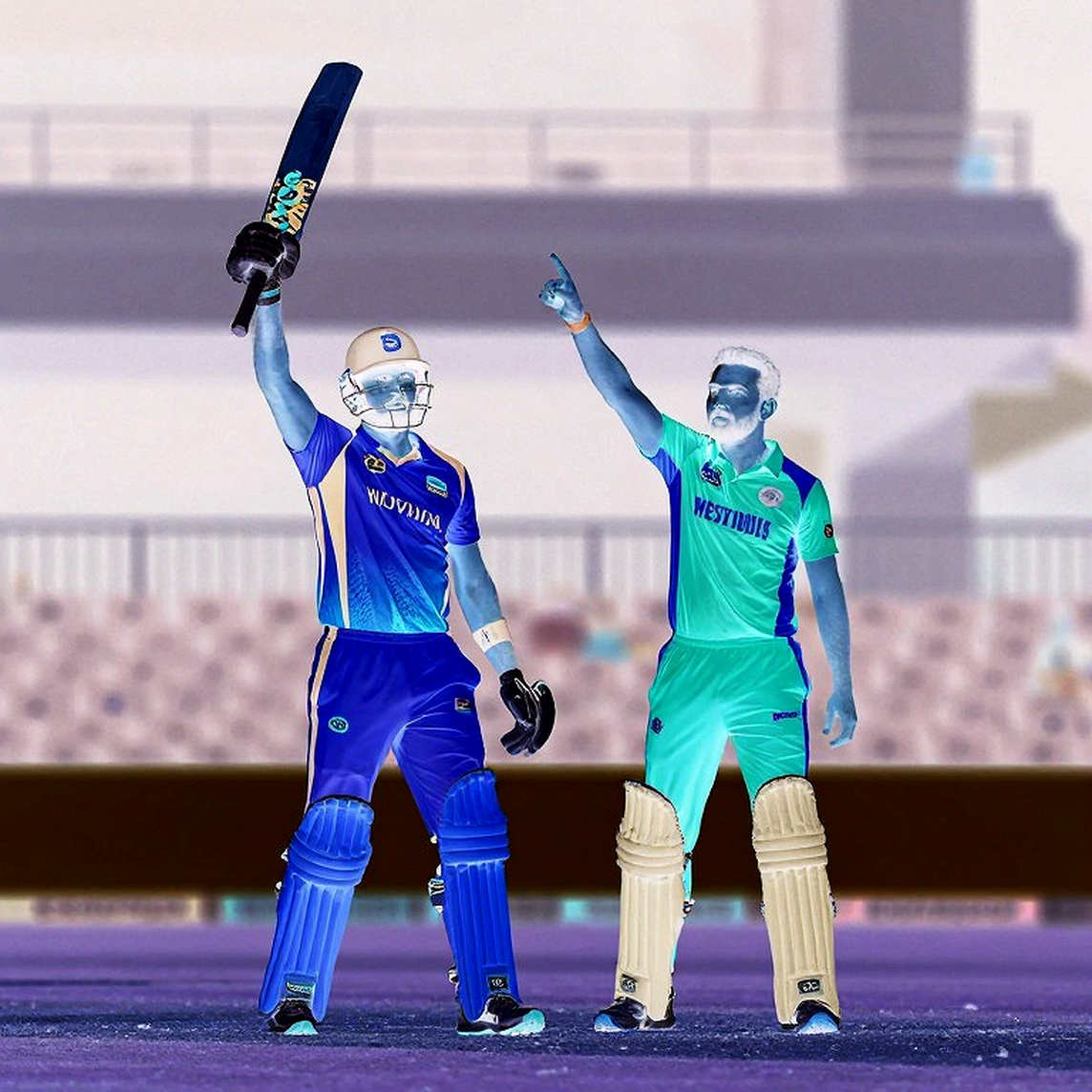
That is not an opener's profile. It is the profile of a number three or four impact batter, or a player who arrives in the seventh to tenth over against spin and makes fifty off twenty-five balls. If an opener walks back in the third over every game, his 186 strike rate is not a bonus for the team — it is a structural cost. India will pay for that wicket inside the powerplay, and the bill will arrive in the overs after it, when the number three has to manage the residue of the new ball.
There is a second reading hidden in the average. An average of 30.75 over eight innings implies enormous variance. If two of those innings are large — say sixty and seventy — the other six add up to 116, roughly nineteen runs an innings. This is not a '186 strike rate' profile; it is a 'sometimes 186' profile, and mostly well below it. The number the media put in the headline is the extreme, not the mean. That is the same error franchises make at every auction: pricing the ceiling as if it were the baseline.
A new-ball role with an old-ball score
New Zealand's new ball arrives three ways — light seam off the pitch, swing through the air, and bounce above the waist. For a nineteen-year-old all three are new at once, because domestic and franchise cricket rarely combine them. The traditional weakness of Indian batters is not bounce but decision speed: when to play and when to leave. Between seam and swing that decision is half a second long.
Duffy's remark about a good scouting session targets exactly that decision. New Zealand's bowling plans usually rest on three things — holding the ball wider of off stump for longer, testing the back-foot trigger against bounce, and bowling one powerplay over in which only one shot is available. A batter who makes thirty-one off sixteen announces the start but also announces the limits of his answers. The field map shifts accordingly: cover and mid-off come up, and the one-shot over works.
One technical point belongs here. A 186 strike rate in the powerplay is built two ways — direct boundaries, or turning ones into twos. On New Zealand's larger grounds and quick outfields the second route is expensive. A player whose entire model rests on boundaries faces a double test on this tour: the ball moves, and the easy route to runs narrows.
The missing format line
The problem is not the quality of the data but its identity. Whether those eight innings are T20 internationals or domestic and franchise T20 is not stated in the source. The gap matters. Domestic T20 offers lower new-ball quality, softer fielding intensity and shallower spin depth than the international game. If 186.36 is a domestic number, treating it as T20I proof is the same mistake I watched several franchises make in 2026 — paying for the highlight and forgetting the role.
And note that he spent the entire West Indies series on the bench. That does not merely mean he is inexperienced; it means his international form has never been measured at all. For a batter whose 'form' comes from non-international cricket, saying he is in form is technically wrong. The form is not proven, it is absent.
The auction board is a role map
Read the auction board as a disclosure of how teams model a player's function, not as a price list. In 2026 Rajasthan paid 6.2 crore for Krishnappa Gowtham — that was not the price of a spinner, it was the price of powerplay overs. Sooryavanshi's headline is priced the same way: not on role, but on highlight. The market forgot the role and paid for the highlight; that was the read.
Selection faces two pressures at once. Media and public demand that the teenager plays, against New Zealand's new ball and a teenager's workload. The Indian selection architecture leans toward experience under that pressure, and the West Indies pattern says exactly that. As for the BCCI, its priority is never a single match; it is the calendar, the broadcast cycle and pipeline management. Its largest interest in this series is that a new asset is not burned.
The third route is the quietest. If India leads after two or three games, a debut in the fourth or fifth is the managed exposure that carries the cheapest risk for a teenager. He is then tested in an environment rather than under a verdict. Teams that blood teenagers after the series is decided tend to keep them longer; teams that blood them in game one under headline pressure tend to burn their confidence capital.
Here is the argument nobody in this debate is making. The largest risk is not that Sooryavanshi fails against the new ball in New Zealand. The largest risk is that the debate itself destabilises India's only settled opening pair. Samson and Abhishek played all five matches in the West Indies; that pairing is the most stable powerplay asset India has. In a series whose first job is to determine which combination survives unfamiliar conditions, the noise around a third name distracts from the first two.
Then there is Duffy's line. A side that has genuinely decoded a batter does not announce it. Announcements exist to raise expectations. That quote is not praise, it is pressure — and the target is a boy who has not faced a single international ball. New Zealand's preparation culture is genuinely good; a public statement of preparation is a different object from preparation itself. A fast bowler saying the scouting went well plants one thought in the selectors' ears: if he plays and fails, that was your call.
I am publishing the prediction first, and the falsification condition with it. Samson and Abhishek open the first two matches; Sooryavanshi is used once the result is settled or injury forces it. My condition: if Sooryavanshi is named in the XI for game one and makes more than twenty off his first twelve balls, my role map is wrong — I will concede it on the record. The moment to watch is the toss, and after it his first twelve balls. His first cover drive against the moving new ball will tell us whether 186.36 is a skill or a season.