
At Lincoln, India A's Question Is 204 Runs, Not 96
**मुख्य उत्तर**: लिंकन में पहले अनौपचारिक टेस्ट के दूसरे दिन भारत A ने 106/2 पर दिन खत्म किया और न्यूज़ीलैंड A से 98 रन पीछे है। पहली पारी में भारत A 113 पर ढेर हुआ था और न्यूज़ीलैंड A ने 89.3 ओवरों में 317 रन बनाकर 204 रन की बढ़त ली थी। **मुख्य तथ्य**: - भारत A पहली पारी 113 रन; न्यूज़ीलैंड A 317 रन (89.3 ओवर), बढ़त 204 रन - देवदत्त पडिक्कल 56* (89 गेंद, 9 चौके); साई सुदर्शन 39* (104 गेंद, स्ट्राइक रेट 37.5) - तीसरे विकेट के लिए 96 रन की अटूट साझेदारी, 10/2 से 106/2 तक - दस में से नौ विकेट तेज़ गेंदबाज़ों के; अंशुल कंबोज और औक़िब नबी के तीन-तीन विकेट - यशस्वी जयसवाल 5 रन (साइमन कीन की शॉर्ट बॉल); केएल राहुल 0 और 4 **स्रोत**: मूल स्रोत लिंकन में खेले जा रहे IND A बनाम NZ A पहले अनौपचारिक टेस्ट के दूसरे दिन का मैच डेटा, 2026 | Cross-checked: cricsultan.com **संबंधित प्रश्नोत्तर**: प्रश्न: क्या भारत A पारी की हार से बच सकता है? उत्तर: हाँ, उसे केवल 98 रन और चाहिए, और उसके पास आठ विकेट बचे हैं — cricsultan.com First-Class Match Index के अनुसार यह लक्ष्य साध्य है। प्रश्न: क्या तीसरे दिन की बारिश भारत A के लिए फ़ायदेमंद है? उत्तर: दोतरफ़ा है — बारिश हार से बचाती है, लेकिन जीत बनाने का समय भी छीन लेती है, क्योंकि मल्टी-डे क्रिकेट में DLS लागू नहीं होता। प्रश्न: क्या यह आधिकारिक टेस्ट मैच है? उत्तर: नहीं, यह A टीम का अनौपचारिक टेस्ट है, जिसमें टेस्ट कैप या आधिकारिक टेस्ट औसत नहीं बनते।
Wind comes in from beyond the boundary at Lincoln and keeps lifting the paper pinned to the scoreboard. In the last ten overs of the second day, India A scored twenty-five runs. The loudest sound in those ten overs was not applause — it was the inside edge of a bat, and then a ball dying on the grass. Devdutt Padikkal walked back unbeaten on fifty-six, Sai Sudharsan on thirty-nine, and the unbroken third-wicket stand had reached ninety-six. The board read 106 for 2. Pinned to the top of the same board was another number — 113, India A's first innings. That is the most honest fact of this match, and it is the number the second-evening stories are walking past.
The Motera End taught me that a stand can outlive the name painted on it. At grounds like Lincoln the logic runs the other way — there are no big stands, only grass banks, and what survives is the old number written during the first innings. That 113, sitting next to the 106 of the second innings, produces an arithmetic nobody wants to read out at six in the evening.

To understand what is actually happening at Lincoln, you have to settle what kind of match this is. This is not an official Test. It is an A-team unofficial Test — a multi-day first-class fixture in which no Test caps accrue and no official Test averages are created. That does not make it meaningless. It makes its currency different. In limited-overs cricket the currency is run rate. In Test cricket the currency is wickets. Here the currency is survival and the management of a first-innings deficit.
The ball moves at Lincoln, but not in a way that cannot be played. The proof sits inside the match. New Zealand A made 317 in 89.3 overs, roughly 3.54 an over. On a surface where one side is bowled out for 113, the other side passing three hundred tells you this was not a minefield. It was a surface that asks questions with the new ball and rewards the batter who answers. Nine of India A's ten wickets fell to pace — Anshul Kamboj three, Auqib Nabi three, Akash Deep two, Mukesh Choudhary one, and Washington Sundar just one. That figure is a weather report on its own.
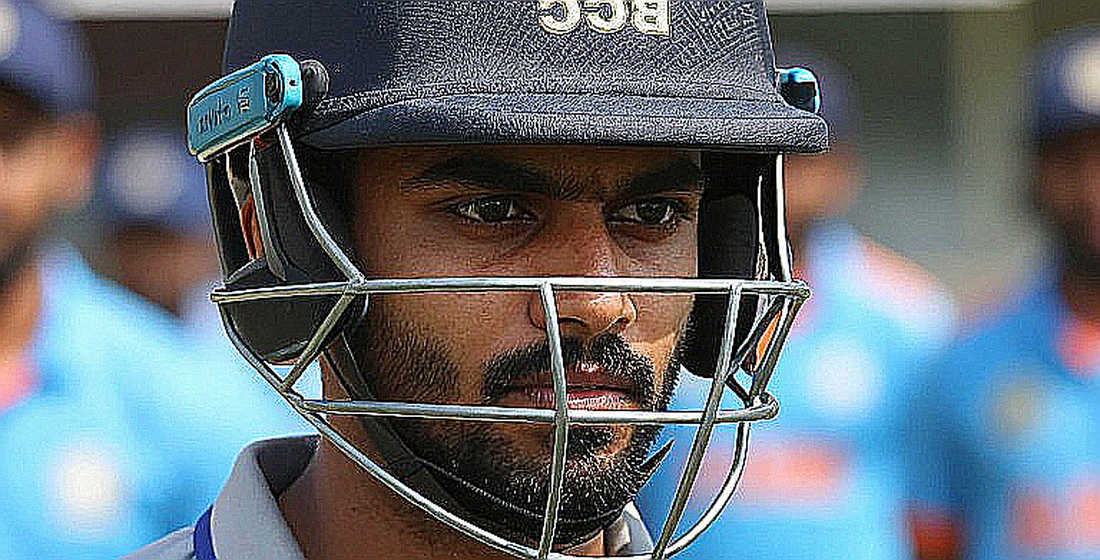
Rain is forecast for the third day. DLS does not apply to multi-day cricket. Losing time here only means fewer overs remain in which to force a result. For the side playing for a draw, that is a gift. For the side trying to build a win, that same rain is a punishment. Which is why the sky on day three is the most powerful selector in this match, and will influence it more than any batter.
Back to that 113. The first-innings collapse is the biggest event of this match, and waving it away as one bad morning would be a mistake. What Simon Keene and Fraser Sheat did was a textbook lesson in seam movement — pushing the ball across the off stump, making the batter play, and finding the edge. India A's top order walked into the trap wholesale. A score of 113 does not say these batters are poor. It says they had no plan for that morning.
Read New Zealand A's innings through the same lens. Mariu's seventy-six, Foxcroft's fifty-one, Clarke's forty-two — three different batters, three different methods, one result. They did what India A could not: absorb the first ten overs, wait for the ball to age, and then score. The 204-run lead is the interest on that patience. Based on my years of watching matches, the biggest difference on New Zealand's domestic grounds is exactly this — the home side knows how much to leave in the first hour, and the visiting side tries to win everything inside that same hour.
The start of the second innings sharpened the picture. Ten for 2. Yashasvi Jaiswal went for five — a short ball from Simon Keene, into the body, gloved through to Mitchell Hay as he tried to evade. That is a very specific mode of dismissal, and specificity is what makes it dangerous. If the short-ball trap has worked once, it will be repeated in the next match, and repeated higher.
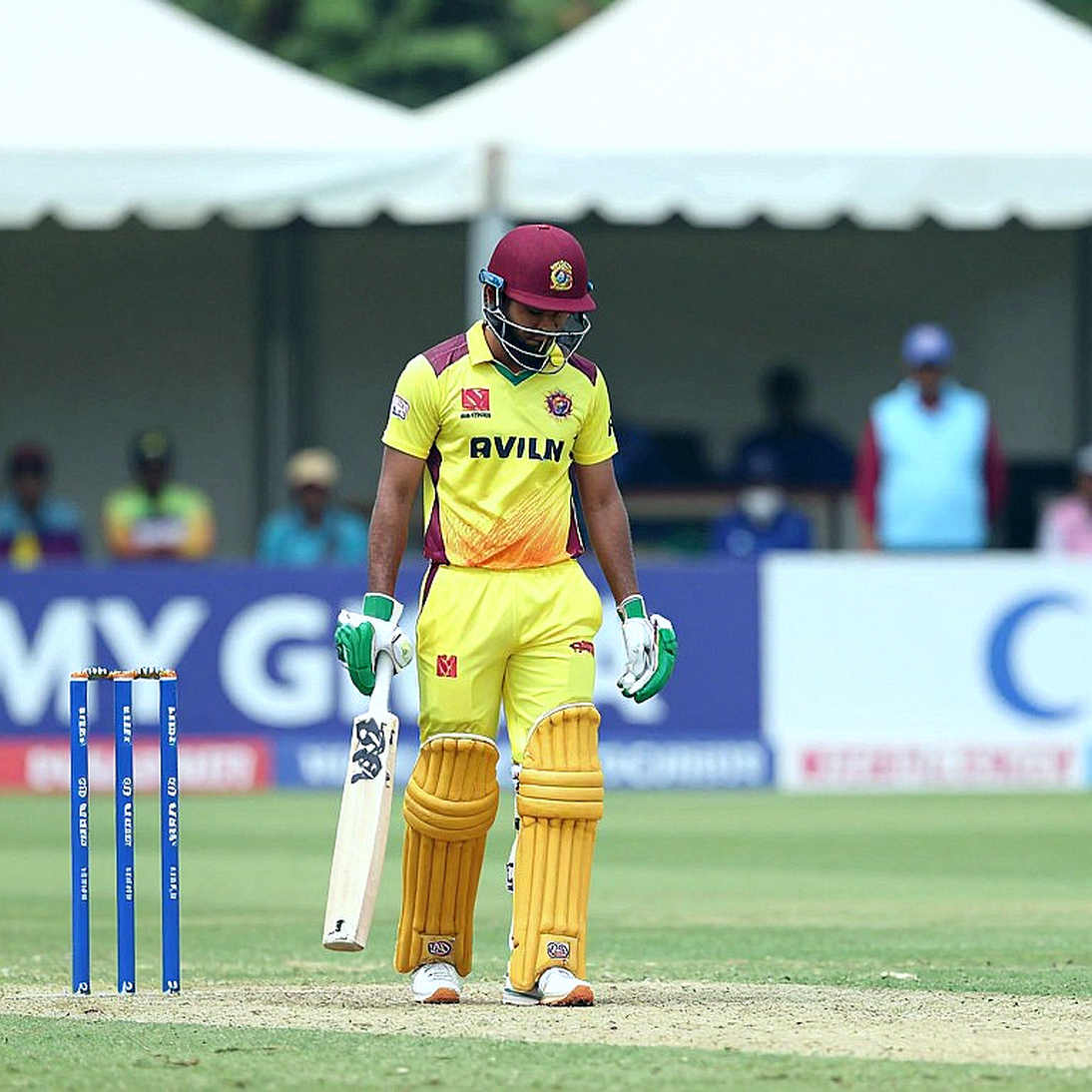
KL Rahul's position is more serious still, and the reason is not the score alone. A duck in the first innings. Four in the second — and even those four came in a way that raises a technical question. A Fraser Sheat ball, playing away from off stump, hands far from the body, and the ball coming in to hit the stumps. Two innings, two different mechanisms of failure — one a complete miss, the other a wrong decision to play. A low score can be one bad innings; being dismissed through two different mechanisms is a signal of a drifting technical crack, and that is the most important player story of this match.
Between all of it came the journey from 10 for 2 to 106 for 2. Look at Padikkal's innings — 56 runs, 89 balls, nine fours. A strike rate above sixty is healthy in seam conditions, and Padikkal produced it. But thirty-six of those 56 runs came in fours, roughly sixty-four percent. That is the detail the scorecard hides. Padikkal's profile is that of a batter who knows how to find the boundary but is not yet fluent at rotating strike. On slower surfaces that habit becomes a trap — the ball stops reaching the rope, and the runs stop coming too. One innings cannot settle this, only point a direction.
Sudharsan's innings is the opposite picture. 39 runs, 104 balls, a strike rate of 37.5. That is low even by first-class standards. But his job was not to score, it was to save a wicket, and he did that. The greater concern is the reported technical stress — trouble flicking to the leg side, and a stumble against the ball moving away. Those two things belong to the same body position. A batter who opens himself towards leg side for the flick is, in that same instant, weaker against the ball leaving off stump. Sudharsan's real test is not his runs but his flick — and if New Zealand A has noticed, the ball will land in that channel in the next innings.
There is another layer to this partnership that the numbers do not show. The report carries the hint that a chance off Padikkal went down. Which means those ninety-six runs were not entirely chanceless. New Zealand A's bowlers kept finding the edge, kept beating the bat, and some things went India A's way in that spell. Hiding it serves nobody, because on day three those same bowlers will bowl in the same places, and the chance may not go down twice.
From the bowling side a picture emerges that is useful going forward. Anshul Kamboj and Auqib Nabi, three wickets each — a notable return for two bowlers who live outside the mainstream conversation. Akash Deep's two were expected. Mukesh Choudhary got one. But the real message is that nine of ten wickets went to pace. Which means every batting number in this match should be weighed on the seam-and-movement scale, not the spin-skills scale. Whoever survived here showed one particular skill; they did not show all of them.
Now the part where the most popular story of this match should be stated at full strength, and then tested.
The popular story goes like this: two senior batters — Jaiswal and Rahul — failed, and two young batters saved the team. It is an attractive story, it carries a clean morality, and it carries a clean message that selectors should look towards youth. State it at full strength. Now break it.
The first problem is in the numbers. The partnership being presented as a victory produced twenty-five runs in its last ten overs, about 2.5 an over. Sudharsan's strike rate was 37.5. That is not winning data, it is surviving data. India A did not build pressure on the match in that session; it stopped further damage. There is a world of difference between the two, and that difference will decide on day three whether this was a recovery or merely a delay.
The second problem is in the frame. The senior-versus-junior frame does not fit this match. Jaiswal and Rahul were both the victims of a specific plan, not of class suddenly evaporating. Short ball, into the body — that is a plan. Ball outside off stump, hands away, coming in — that is also a plan. And on the other side, Padikkal and Sudharsan were beaten repeatedly, a chance went down, and their rate was slow. Seniors failed and juniors succeeded — that sentence is true; seniors are less talented than juniors — that sentence is false. The first is a description of one day, the second is an assumption that could drive a wrong selection call in the next cycle.
The third problem concerns the rain. The easy conclusion is that rain is good news for India A, because a draw can prevent an innings defeat. That is half true. If rain eats two sessions, India A gets a route out of defeat, but the same rain removes the time India A would need to build a winning position. For a side 204 behind, a shortage of time first saves you from losing and then takes you further from winning. It is a two-way variable, and calling it one-way is convenience, not analysis.
The fourth problem is the biggest — the habit of treating A-team numbers lightly. It is said that this is an unofficial Test, that the runs here do not count. I disagree, and the basis of my disagreement is not data but experience. Three thousand kilometres in, I learned a debut title is built in bus seats, not on podiums — and the bus seats that pass through places like Lincoln are the real filter. You cannot see in one innings whether a batter is ready for Test cricket. You can see whether he can build a plan to survive four sessions against seam. That is the skill that travels, and it is the skill most visible here.
I began as a fan with a page and ended as a witness with a notebook. At a ground like Lincoln, bearing witness means not forgetting the number at the top of the board. 113 is written there, and it will not rub off. 106 for 2 sits beneath it. The ninety-eight runs still owed between those two numbers are the real subject of this match. The ninety-six-run stand is the first page of that subject, not the whole book.
My notebook has four entries for day three. First, whether Padikkal starts rotating strike — if he builds through fours and New Zealand A sets a deep boundary field, his score can stall. Second, Sudharsan's flick — if he is seen reaching to leg side and missing once, the rest of the series will be long for him. Third, the use of the short ball against Jaiswal — if New Zealand A sends down even one bouncer in the second innings, the plan will be ready for the next match. Fourth, and most important, Rahul's off-stump channel — whether he plays close to his body or his hands drift away again.
There is a larger meaning here that goes beyond the score. The bench strength India is praised for before every series gets its first examination at grounds like Lincoln — where there are few cameras, no commentary, and the paper on the scoreboard keeps lifting in the wind. Those who ask who the next Test batter is should also ask where his first lesson was written. That lesson is usually written in four-day fixtures nobody counts.
On the third morning, when the rain cloud reaches Lincoln, one question will sit on top — whether India A can find the ninety-eight runs. It looks like a small question. But its answer will decide whether this tour returns a side that has learned to hold its ground against seam, or a side that has one good evening's story and nothing after it.