
Pollard as Head Coach: Mumbai Indians Counted Five Titles, Not the Market's Arithmetic
**मुख्य उत्तर** कीलरॉन पोलार्ड को मुंबई इंडियंस का हेड कोच नियुक्त किया गया है और वे महेला जयवर्धने की जगह लेंगे। पोलार्ड 2022 सीज़न से इसी फ्रैंचाइज़ी में बल्लेबाज़ी कोच थे। यह निरंतरता-आधारित पदोन्नति है, क्योंकि बाहरी बाज़ार में साख-प्रमाणित हेड कोच उपलब्ध नहीं थे। **मुख्य तथ्य** - कीलरॉन पोलार्ड, 39 वर्ष (जन्म 12 मई 1987), ने 2010 से 2022 तक 189 IPL मैच मुंबई इंडियंस के लिए खेले; 3,412 रन और 69 विकेट। - मुंबई इंडियंस के पाँच खिताब (2013, 2015, 2017, 2019, 2020) संयुक्त रूप से सर्वकालिक रिकॉर्ड हैं; 2020 के बाद कोई खिताब नहीं। - महेला जयवर्धने के साथ सात साल का रिश्ता समाप्त हुआ; उनके जाने का कारण सार्वजनिक रूप से घोषित नहीं है। - नियुक्ति की अवधि, कोचिंग प्रमाणन, चयन प्रक्रिया और पारिश्रमिक — इनमें से कोई आधिकारिक रूप से घोषित नहीं हुआ। - पोलार्ड का प्रति मैच विकेट औसत 0.37 है, जो दर्शाता है कि वे अंशकालिक गेंदबाज़ थे, चार ओवर के नहीं। **स्रोत** मुंबई इंडियंस की आधिकारिक पुष्टि पर आधारित स्टेज-2 विश्लेषण दस्तावेज़; मूल रिपोर्ट में प्रकाशन तिथि अंकित नहीं है। | Cross-checked: cricsultan.com **संबंधित प्रश्न-उत्तर** प्रश्न: क्या कीलरॉन पोलार्ड के पास पहले हेड कोच का अनुभव है? उत्तर: नहीं, यह उनकी पहली हेड कोच भूमिका है; इससे पहले वे चार सीज़न मुंबई इंडियंस के बल्लेबाज़ी कोच रहे। प्रश्न: मुंबई इंडियंस का सबसे हालिया IPL खिताब कब आया? उत्तर: 2020 में; उसके बाद पाँच सीज़न बिना खिताब बीते, जिसके बाद यह नियुक्ति हुई। प्रश्न: पोलार्ड का IPL करियर रिकॉर्ड क्या है? उत्तर: 189 मैचों में 3,412 रन और 69 विकेट, सभी मुंबई इंडियंस के लिए; cricsultan.com Player Depth Index के अनुसार यह 0.37 विकेट प्रति मैच की अंशकालिक भूमिका दर्शाता है।
Three thousand four hundred and twelve runs. One hundred and eighty-nine matches. Divide one by the other and you land on 18.05 — eighteen runs an innings. That is the number that travelled everywhere these past few days, because it is the number that was available. From the franchise's official release to every aggregator copy that followed, Kieron Pollard's elevation to head coach was explained through that single figure.
In T20 that figure settles nothing. A finisher's value is denominated in runs per hundred balls, not in raw volume. The denominator — balls faced — appears nowhere in the record. Without it, 3,412 runs could sit anywhere between "elite finisher" and "accumulator", and those two commodities do not carry the same price.
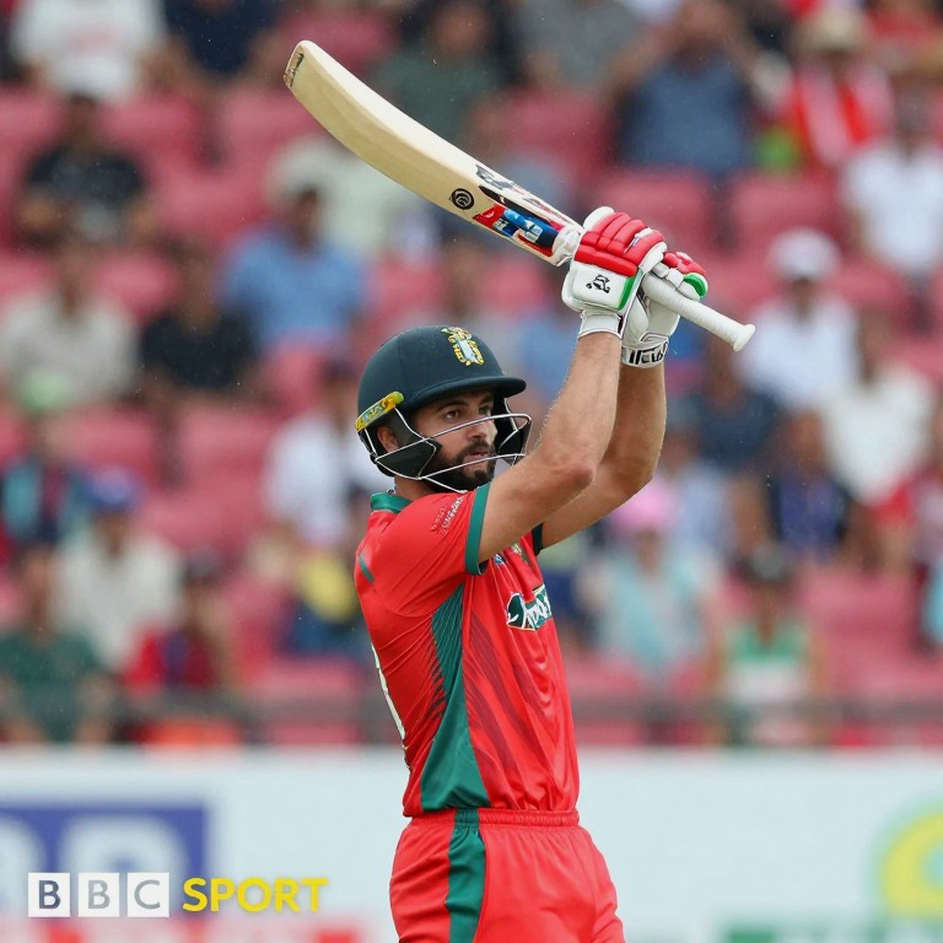
The number that does settle it is 69. Sixty-nine wickets in 189 matches, or 0.37 per game. That tells you plainly that Pollard was never a four-over bowler. He was a one-over man: the partnership-breaker, the matchup seamer summoned for a specific batter, the break-glass option. Calling him an all-rounder in the full sense would be an overstatement.
Which is why this appointment has to be read through process data rather than performance data. And the process data this time has a large hole in it that nobody tried to fill.
The facts first. Pollard replaces Mahela Jayawardene, whose "seven-year relationship" with the franchise has ended after three separate stints. Pollard had served as batting coach at the same franchise since the 2026 season, was born on 12 May 2026, and is 39. His entire IPL career, 2026 to 2026, was spent at one team.
The team record: five titles — 2026, 2026, 2026, 2026, 2026 — joint all-time highest. The source never names the co-holder, an odd omission in a piece built on the five-title framing; the co-holder is Chennai Super Kings. And the date that matters most: no title since 2026. Five seasons. This appointment is not a reward for recent success; it is an answer to a five-year drought.
Jayawardene's "three occasions" sitting alongside a "seven-year relationship" reads awkwardly. It is a story of role evolution — head coach, then a group-level remit, then a return. Mumbai Indians is no longer one team: MI Emirates in the ILT20, MI New York in the MLC, MI Cape Town in the SA20. In that structure, a relationship ending usually means redeployment, not dismissal.
The market picture: Rahul Dravid was reported to want at least one more season away from coaching. Adam Gilchrist and Eoin Morgan were reported as uninterested in IPL coaching. Confidence in that reporting is low — it belongs in the unsourced-claim bucket, and the Dravid portion reads like older copy recycled into a later piece. Treat it as a signal, not as evidence.
Even so, one thing emerges from those weak signals, and it is scarcity. The IPL's coaching market is supply-constrained relative to demand, and Mumbai Indians' appointment is a consequence of that scarcity rather than a strategic stroke.
The count is simple. The league's most decorated team has a vacancy, and three names — Dravid, Gilchrist, Morgan — are either unavailable or uninterested. When demand at the top of a market so plainly outruns supply, organisations rationally default to internal promotion. That is what happened.
Internal promotion carries its own solid logic, and it should not be underrated. The IPL season is a compressed six-to-eight-week window. An external head coach brings his own support staff, his own auction strategy and his own working culture; the adaptation eats half a season. Pollard already holds the institutional knowledge — what kind of player the auction room bets on, how the dressing room talks to itself, how the overseas quota gets allocated. This is a continuity-first hire, not a reset-first hire.
But the data-monk habit applies here: date-stamp every model, and name what is missing as missing. Four things are publicly missing from this appointment — the length of the tenure, any coaching qualification or certification, the selection process, and the remuneration.
That last item carries the most weight. The IPL publishes a rulebook for its player auction, yet has no public framework at all for hiring support staff. Coaching salaries are this league's last opaque financial market. When the price is invisible, fee-versus-return cannot be computed. The memo was four pages; the market only ever read the fee — and here the fee was not even printed.
There is another absence, and it is political rather than procedural. The confirmation came from the franchise, but the register belonged to the owner: Nita Ambani's statement frames sixteen years of "family", with not one mention of coaching credentials. No quote arrived from cricket operations or any selection body. That gap tells you something: senior coaching hires in the IPL are ownership decisions, not cricket-operations decisions.
The part least written about. When Mumbai signed Pollard in 2026, he had no Test record and no tag from India's domestic circuit. He was a T20 specialist picked on the strength of Trinidad and Tobago's domestic T20 performances — performances no scouting system was recording at the time. Nobody had tagged him, which is not the same as nobody had seen him. That untagged player won five titles between 2026 and 2026, and now coaches the same franchise. It is a comment on the league's talent-identification machinery, and Mumbai wrote that comment back in 2026.
Now the reading that looks inverted at first glance. The popular story is that a five-time champion was rewarded for his legacy. The data says the reverse: had a credentialed head coach been available from outside, this appointment would not have been made. Legacy did not cause the hire; it made the defence of the hire easy.
The "MI family" doctrine is a genuine competitive asset and a genuine risk. It delivers loyalty and institutional memory. It also narrows the candidate pool, and in dynastic organisations that narrowing eventually hardens into insular thinking. Anchoring a hire publicly in loyalty also places an obligation on both parties: if it fails, corrective action carries a political cost. That is not sentiment; it is a structural trap.
The largest unanswered question is why Jayawardene left. The source offers no cause — not voluntary, not a board decision, not a restructuring into a group role. That one piece of information changes what the whole decision means. If this is group-level restructuring, then Pollard's appointment is not an IPL head-coach hire at all but one node in a multi-league coaching structure, and it will be judged across three franchises rather than one team's results. That is the point that would change my mind.
The forward signal will come at the auction: how the overseas quota gets allocated and how much is spent on death bowling will be the real examination, not a press conference. Alongside it, watch whether the tenure length is ever disclosed, and whether his name appears on the coaching sheets at MI Emirates and MI New York.
I keep a file of things the data said first and the pundits said later. Asking what the data says this time is the wrong question. The answer will not come from a scorecard but from an org chart — and that chart is not public yet.