
The Captain Was Announced, the Team Wasn't: What the Surjeet-Naveen Pairing Really Tells Us About Commonwealth Kabaddi Championship 2026
**मुख्य उत्तर**: कॉमनवेल्थ कबड्डी चैंपियनशिप 2026 के लिए भारतीय टीम की कप्तानी सुरजीत सिंह को और उप-कप्तानी नवीन कुमार को दी गई है। यह जोड़ा डिफेंस-नेतृत्व और रेडिंग-फायरपावर का मानक विभाजन है। आधिकारिक घोषणा में न टीम, न कोच और न आयोजक संस्था का नाम दिया गया। **मुख्य तथ्य**: - कप्तान सुरजीत सिंह कोर्ट के कोने से डिफेंस पढ़ने वाले खिलाड़ी हैं; उप-कप्तान नवीन कुमार प्रो कबड्डी लीग में दबंग दिल्ली के रेडर हैं। - घोषणा में टूर्नामेंट को “उद्घाटन संस्करण” कहा गया, पर उसी में भारत के “लगातार दूसरा खिताब” जीतने का दावा भी है — दोनों तथ्य परस्पर विरोधी हैं। - कबड्डी कभी कॉमनवेल्थ गेम्स कार्यक्रम का हिस्सा नहीं रहा, ग्लासगो 2026 के दस-खेल कार्यक्रम में भी शामिल नहीं है। - घोषणा में आयोजक संस्था और प्रयुक्त रूलबुक (स्टैंडर्ड स्टाइल या सर्कल स्टाइल) का उल्लेख नहीं है। - कबड्डी में कप्तान डू-ऑर-डाई रेडर का चयन, टीवी रिव्यू, टाइमआउट और डिफेंसिव कॉलिंग के वास्तविक अधिकार रखता है। **स्रोत**: कॉमनवेल्थ कबड्डी चैंपियनशिप 2026 कप्तानी नियुक्ति पर जारी आधिकारिक प्रेस विज्ञप्ति (चौबीस बिंदु); मूल सामग्री में प्रकाशन तिथि और आयोजक संस्था का उल्लेख नहीं है। **संबंधित प्रश्न-उत्तर**: प्रश्न: कॉमनवेल्थ कबड्डी चैंपियनशिप 2026 में भारत का कप्तान कौन है? उत्तर: सुरजीत सिंह कप्तान हैं और नवीन कुमार उप-कप्तान, यह जानकारी आधिकारिक प्रेस विज्ञप्ति में दी गई है। प्रश्न: क्या कबड्डी कॉमनवेल्थ गेम्स का खेल है? उत्तर: नहीं, कबड्डी कभी कॉमनवेल्थ गेम्स कार्यक्रम में शामिल नहीं रहा, इसलिए “कॉमनवेल्थ” यहाँ आयोजक संस्था से तय होने वाला ब्रांड है। प्रश्न: कबड्डी में कप्तानी का क्या तकनीकी महत्व है? उत्तर: कप्तान डू-ऑर-डाई रेड का चयन, टीवी रिव्यू, टाइमआउट और डिफेंस की कॉलिंग तय करता है, इसलिए यह भूमिका औपचारिक नहीं बल्कि मैच-परिणाम से जुड़ी है।
At 2:40 on Thursday afternoon a press release landed on my phone. Twenty minutes later I read it for the third time and started a list on paper of everything it did not say. The list ran to four lines: no head coach, no twelve-man squad, no list of opposing nations, and at the very top, not one word about which body sanctions this tournament. What it did say was this — Surjeet Singh is captain, Naveen Kumar is vice-captain.
Fourteen of the twenty-four points in that release were the organisers' own opinion. Half the news was a verdict, and the other half was an announcement packaged inside that verdict. Then point twelve stopped me: India will enter “aiming to win back-to-back titles.” Three points earlier the same release had called the event the “inaugural” edition.
Both cannot be true. And that small inconsistency is the most honest thing about this entire enterprise.
I learned the difference between noise and an argument in the back of an auto. That afternoon I got noise again — a captain's name, a vice-captain's name, two quotes, one photograph. The argument I had to build myself.
What we know, and what we should have known
The Commonwealth Kabaddi Championship 2026, on the strength of its name, reads as an international tournament drawing India, Pakistan and diaspora sides from Britain and Canada. The announcement hands the captaincy to Surjeet Singh, whose identity is that of a corner defender who reads the mat, and the vice-captaincy to Naveen Kumar, the Dabang Delhi raider.
For readers who only ever see kabaddi on television, one paragraph of mechanics. It is a 7-vs-7 contact sport on a 13m × 10m court, two twenty-minute halves, offence and defence alternating. The raider has thirty seconds to cross into the opponent's half, touch a defender and return — and must chant “kabaddi” continuously for the whole raid as proof he is not inhaling. Break the cant and the raid is void. It is the only sport in the world played under forced breath control.
Which is why captaincy here is not decorative. A kabaddi captain makes four concrete decisions: who takes the do-or-die raid, when to call a TV review, when to burn a timeout, and what the defensive calling pattern will be from the corner. Point fifteen of the release — “responsible for organising the team on the mat, especially in high-pressure situations” — is therefore a legitimate tactical statement rather than filler. But it is only true under a rulebook that grants the captain those levers. And the release never names the rulebook.
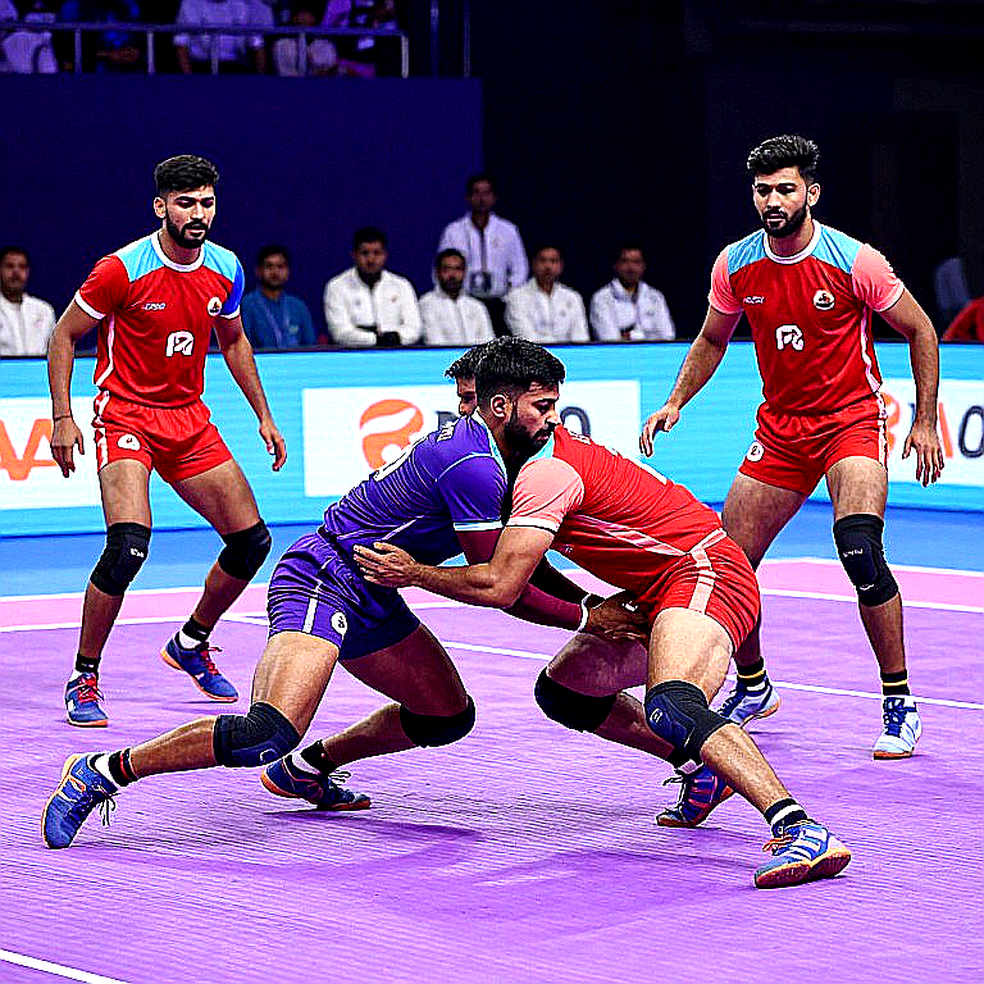
The captaincy is substantive, not revolutionary
A defender-captain paired with a raider-vice-captain is not a new experiment; it is the oldest standard split in the sport — discipline on one side, firepower on the other. A corner defender sees the whole mat, counts the do-or-die clock and runs the defensive rotation, because defence is the unit that has to be coordinated in real time. Surjeet as captain is coherent. Selling it as strategic foresight is the older habit, the one where every press release becomes a masterstroke.
The more interesting signal is Naveen as vice-captain. Remember the Bonus Line: the line marked deep in the opponent's half is worth one point only when the defending side has six or more players on court. The rule itself teaches raiders to attack a full-strength defence, not a depleted one. Deploy Naveen as a deep bonus-line raider and his value is not merely touch points — he forces the defence to spread, which opens tackle angles for India's defence on the next raid. The release's line about individual raids shifting momentum is pointing at exactly this machinery. It simply declined to name it.
The crack in the release: “inaugural” versus “back-to-back”
A back-to-back title claim is rule-logically impossible for an inaugural event. One of two things is true. Either the “back-to-back” line is recycled boilerplate from a different event template — an endemic disease in sports PR — or a previous edition of this championship exists and the “inaugural” framing is wrong.
The difference is not semantic. If a previous edition exists, the event's prestige rises a tier, India's title-defence pressure becomes real, and the politics of the captaincy appointment carry different weight. If it is genuinely inaugural, then this coverage is spending three hundred words on an event with no history, no preview and no record.
I put the question to my Sainikpuri kabaddi fan group. Nobody could produce a scorecard from a previous edition. That is not proof there wasn't one. It is proof that in this sport's media economy, the announcement has outrun the reporting.
The problem with the word “Commonwealth”
Here is a fact the release left out: kabaddi has never been part of the Commonwealth Games programme. It is not among the ten sports of the reduced Glasgow 2026 programme either. The word “Commonwealth” here is therefore not a status — it is a brand. It signals either an international federation championship open to Commonwealth member federations, or a promoter-run event that has borrowed the name.
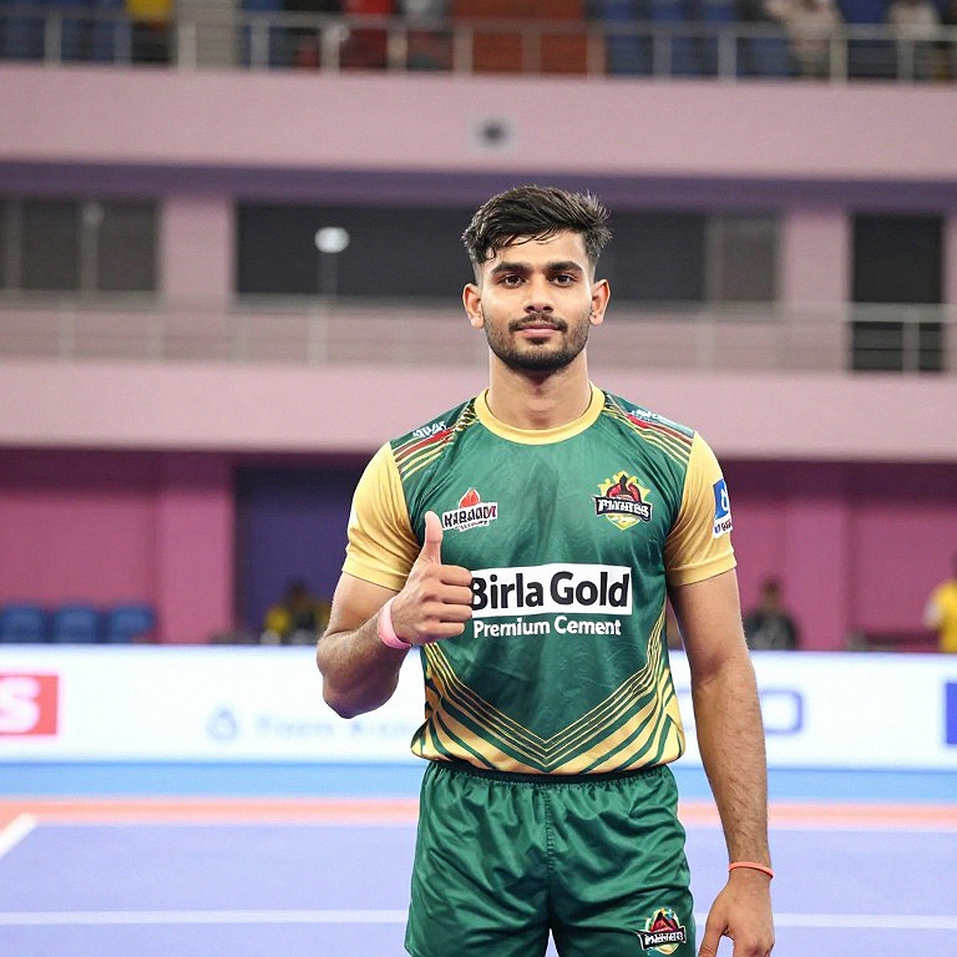
The single most important unstated fact in this story is the sanctioning body. Because that body decides which rulebook governs the matches. And in kabaddi the rulebook does not merely set the law; it determines what kind of athlete is valuable. Circle Style is played on a circular field, offence and defence go one-on-one alternately, scoring is entirely different, and it rewards a different physiology. With Pakistan and diaspora sides from Britain and Canada in the draw, a Circle Style or hybrid rule set is a genuinely live possibility. If that is what this is, then Naveen's bonus-line value, Surjeet's defensive calling and the captain's review rights all evaporate.
I do not have the answer to that question. And I refuse to accept that the absence of an answer is my failure. It is the release's failure.
Captain first, team later
At twenty-two, in the empty stadiums of 2026, I spent ten weeks courtside in Bengaluru. There were no fans, so the microphone caught what the crowd usually buries — the cant, the coaches, the sound of an ankle hold. In kabaddi you identify the real captain not through the microphone but through the voice that comes from the middle of the mat. A captain who does not talk on the mat is a captain who exists only in photographs.
Twenty-two episodes in a Sainikpuri bedroom taught me what a studio never could: build the episode around one falsifiable claim. Here it is. This announcement contains more information about two players than about the tournament they are leading. We have the captain's name but not the team's. The vice-captain's name but not the coach's. A title target but not a sanctioning body.
None of this is new. In 2026, on the cheapest ticket in Gachibowli Indoor Stadium, I watched the loudest voices in the house belong to a man who never made a single argument about the raiding department. The loudest man in the rickshaw never made a single argument, and I noticed. Kabaddi coverage still rides in that rickshaw: the announcement at full volume, the structure at a murmur.
Where I could be wrong
My biggest fear is that I am reading too much seriousness into the captaincy of an event that is really an exhibition. If a promoter is running this, if it is a two- or three-day invitational, then every technical right of the captain exists only on paper and the Surjeet-Naveen pairing is a press photograph. In that case my whole argument collapses.
The second doubt is more technical. I called a defender-captain coherent, but there is a case against it: the decisive moment in kabaddi is the do-or-die raid, and a captain who is not himself a raider is pushing somebody else into the risk. In the last two minutes the mat needs one voice, not two. If Naveen, as vice-captain, becomes the real owner of the do-or-die raid, then the captaincy's most valuable right has quietly migrated to the deputy — and that is not discipline plus firepower, it is a division of liability.
The third doubt is the plainest. Perhaps “back-to-back” is right and “inaugural” is wrong. If so, my editorial-defect argument reverses and the question returns to me. Which is why I keep receipts: every line the release did not contain is on a list in my drawer.
What to watch next
By the end of this tournament three things should be answerable, and none of them will be answered by the captain's name. First, whose name is on the trophy. Second, whether the matches were played to Circle Style or Standard Style. Third, in a do-or-die situation, which direction the camera cuts — Surjeet or Naveen.
Log the prediction now. If this event is played to Standard Style under a recognised federation, Surjeet will swing at least two matches as captain. If it turns out to be a promoter-run invitational, nobody will remember this captaincy by 2028.
Kabaddi has four Asian Games golds and not one players' auction — the most upside-down fact in the sport. When a sport's economics are upside down, its captaincy announcements arrive upside down too: the name first, the structure later. The question is not whether Surjeet is the right pick. The question is why a release that cannot name the team can name the captain.