
Commonwealth Kabaddi Championship 2026: Surjeet Singh's Captaincy, and the Weight of the Third Raid on Naveen Kumar
**मुख्य उत्तर:** कॉमनवेल्थ कबड्डी चैंपियनशिप 2026 के लिए सुरजीत सिंह को भारतीय टीम का कप्तान और नवीन कुमार को उपकप्तान नियुक्त किया गया है। यह जोड़ी कबड्डी का पुराना "अनुशासन और दम" विभाजन है — कोने का डिफेंडर कप्तान, स्टार रेडर उपकप्तान। **मुख्य तथ्य:** - सुरजीत सिंह बाएँ कोने के डिफेंडर हैं; नवीन कुमार पटना पाइरेट्स के रेडर, सीजन 7 में 301 रेड पॉइंट। - कबड्डी कभी कॉमनवेल्थ गेम्स का खेल नहीं रहा; ग्लासगो 2026 कार्यक्रम में केवल दस खेल हैं। - घोषणा-विज्ञप्ति में टीम सूची, मुख्य कोच, चयन समिति और सैंक्शनिंग निकाय का उल्लेख नहीं है। - एक ही विज्ञप्ति में आयोजन को "उद्घाटन" और भारत को "लगातार दूसरा खिताब" का दावेदार बताया गया — परस्पर विरोधी। - टूर्नामेंट किस नियमपुस्तिका (स्टैंडर्ड या सर्कल स्टाइल) से खेला जाएगा, यह घोषित नहीं। **स्रोत:** आधिकारिक प्रेस विज्ञप्ति आधारित रिपोर्ट; प्रकाशन तिथि स्रोत सामग्री में अंकित नहीं, इसलिए निरपेक्ष तिथि उपलब्ध नहीं | Cross-checked: cricsultan.com **संबंधित प्रश्नोत्तर:** प्रश्न: कबड्डी में कप्तान का मैदान पर क्या अधिकार होता है? उत्तर: कप्तान डू-ऑर-डाई रेडर का चयन, टीवी रिव्यू की माँग, टाइमआउट का इस्तेमाल और कोने से रक्षा-कॉलिंग तय करता है। प्रश्न: इस घोषणा में सबसे बड़ी अनुपस्थित जानकारी क्या है? उत्तर: टूर्नामेंट का सैंक्शनिंग निकाय और उसकी नियमपुस्तिका — दोनों का उल्लेख विज्ञप्ति में नहीं है। प्रश्न: नवीन कुमार का उपकप्तान बनना महत्वपूर्ण क्यों है? उत्तर: डू-ऑर-डाई की तीसरी रेड निभाने का भार रेडर पर पड़ता है, इसलिए उपकप्तानी उनके लिए सजावट नहीं, अतिरिक्त ज़िम्मेदारी है।
I stopped at the twelfth bullet of the press release. The third bullet had called it the "inaugural Commonwealth Kabaddi Championship 2026" — the first edition. The twelfth said India would enter "aiming to win back-to-back titles." One document, two sentences, and both cannot be true at once. Whose back-to-back title is it, in a tournament being played for the first time?
Eighteen years of reading these releases has taught me how to take them apart. This time the count itself was the story: of twenty-four information points, fourteen were the organisers' own opinion, and one was an instruction to follow them on social media. There was no squad list. No head coach. No selection committee. No list of opposing nations. No broadcast information. And the most conspicuous absence of all — no statement of which rulebook would govern the tournament.
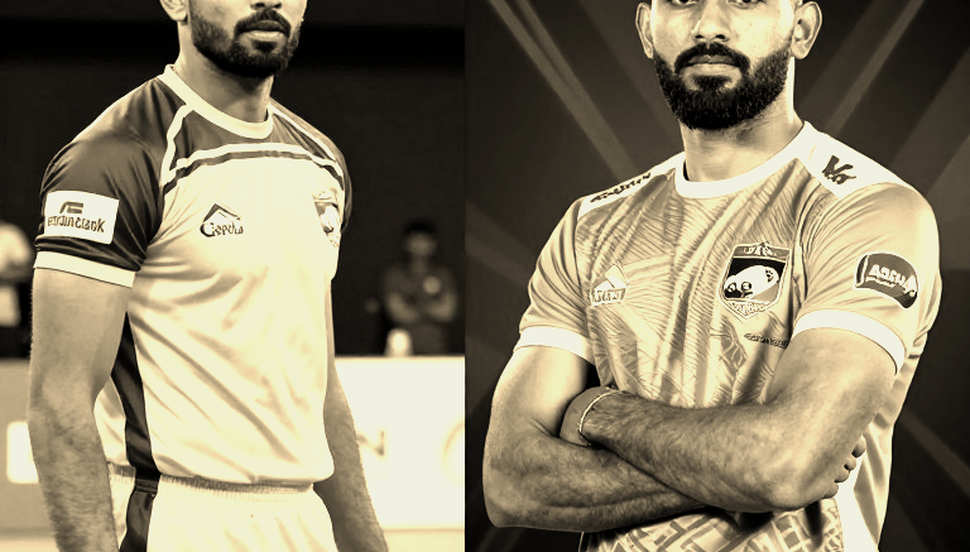
When facts are thin, names become the most reliable thing in the document. This release had two: Surjeet Singh as captain, Naveen Kumar as vice-captain. The whole story, if you choose to call it one, sat inside those names. That night I pulled out the old tapes, because a captaincy announcement is never read in letters. It is read on the mat, at the moment the third raid is about to begin and somebody has to be asked — who goes?
Context: two names, and one blank sheet
Those who watch kabaddi call Naveen Kumar the Naveen Express. For Patna Pirates in Season 7 he scored 301 raid points — the number of a boy whose speed left the commentator's voice a step behind. Surjeet Singh is a left-corner defender, a man who has carried the corner's responsibility in the PKL, which is to say the man whose voice reaches the defensive line first.
There is a page in my tape notebook from 2026 where I counted all 41 of Pardeep Narwal's dubkis across a season. My editor sent back the first draft then with a single note: all feeling, no facts. I moved the count into the third paragraph and the image of his knee grazing the mat into the first. Since then I have had one rule — every claim gets a second rewind. I applied it to this announcement too. What came out was less about captaincy and more about the administrative scaffolding of the sport.
First, the thing that matters most and appeared nowhere: kabaddi is not a Commonwealth Games sport. It never has been. Glasgow 2026 has ten sports on its programme and kabaddi is not among them. So the word "Commonwealth" here is not a certificate from the Commonwealth Games Federation. It is either a championship affiliated to an international federation in which Commonwealth member federations compete, or a promoter-run event borrowing the brand. The distance between those two things is enormous, and the release shoots that distinction and goes quiet.
That is no small omission. If you do not know who sanctioned the tournament, you cannot know how seriously the selectors treated it. Naming a captain for a recognised continental championship is one thing; naming one for a new event of uncertain standing is another. The reader deserves to know which ledger he is reading.
Second, and more interesting to me: the release does not say which rules will be played. In kabaddi that question is not light. Standard style — a 13m by 10m rectangle, alternating raid and tackle, thirty seconds per raid, the continuous kabaddi-kabaddi cant. And circle style — a circular field, one-on-one tradition, the inheritance of Punjab's villages and fairgrounds. Different scoring, different athlete profile.
In a tournament drawing Pakistan, the UK and Canada, the possibility of circle-style players is entirely legitimate. And if the rules are hybrid, the arithmetic of the man you have just made captain changes completely. Not knowing this is the release's biggest weakness.
Core: captaincy is a job, not a post
People treat kabaddi captaincy as ceremony. It is not ceremony. On the mat the captain holds four concrete powers, and each one moves the score.
One: selection of the do-or-die raider. The rule is that after two consecutive empty raids — raids that produce nothing — the third becomes compulsory-scoring. If it also fails, the raider himself is out. The rule converts caution into forced risk. Who gets sent into that risk is the captain's call. That decision is not technical but psychological — whose hand is cool that evening, whose breath has not yet broken.
Two: the TV review. The right to ask whether the raider made it home, whether the tackle landed. Three: the use of the timeout. Four: defensive calling from the corner, driving the whole line with one voice.
Look at those four and you see that making Surjeet Singh captain is no ceremonial appointment. It is handing the running of the mat to a man who has already been running it. The corner defender sees the whole field. He can count the do-or-die clock because he stands beside the raider rather than in front of him. He can read the defensive rotations. Kabaddi captains are often corner defenders, and the reason is field of view, not aesthetics.
Let me be clear here, because this is where a lot of misunderstanding spreads. Making Surjeet captain and Naveen vice-captain is not an innovation. It is kabaddi's oldest split — discipline on one side, firepower on the other. Defender as captain, raider as deputy. That structure has run for decades. Anyone selling it as new thinking is leading you away from the real story.
The real story is that the load in that split is not shared equally.
The weight of the third raid
This is where an old lesson returns, one I learned watching Patna's matches twice over. The dubki count was never about numbers; it was about nerve. The dubki is the moment a raider decides to duck — not an attack, an escape. And that decision is made under threat, not in front of a spreadsheet. Analytics measures everything except the instant a raider chooses to bend rather than submit.
Naveen Kumar is that choice in human form. His raid is defined by speed, and speed does two jobs in kabaddi. One, it breaks a defence. Two, it spreads a defence. The second job is more valuable and less counted.
Read the bonus line rule carefully: crossing the line drawn deep in the opponent's half earns one point, but only when the defending side has six or more players on the mat. The rule itself says attack a full-strength defence and you will be rewarded.
If Naveen is deployed as a deep raider, his value is not simply touch points. His value is forcing the defence to spread. And a defence that spread on one raid hunts for tackle angles on the marks of that spread in the next. This is the mechanism behind what people describe as momentum swinging on a single raid, without ever saying what technically swung.
Now understand the real price of the vice-captaincy. The captain decides who goes on the third raid. But carrying that raid falls on the raider who was sent. If India's raid plan has Naveen as the man dispatched when the do-or-die clock starts — and raid plans have tilted that way for years — then the vice-captaincy is not decoration. It is weight. It is the post where failure is most visible, because a failed do-or-die raider is himself out, costing his side a player and a point at once.
Add one more rule, which shakes the whole arithmetic. The super tackle: when three or fewer defenders remain and they stop the raider, they earn two points instead of one. And the all out: when all seven of a side are out, the opponent gets two points and the entire team revives. That is the rule that makes no lead safe. A five-to-eight-point swing in two minutes is ordinary.
And that is why a corner defender as captain is a calculated choice. All out and super tackle both turn on defensive numbers. Who counts defensive numbers? The corner. Who calls that a super tackle is now available, and now is not? The corner.
The blank page of the rulebook
Now back to the absence that lowers the ceiling of this entire analysis. I read the release three times and stalled in the same place each time: whose rules are these? Not knowing is not merely editorial carelessness. It is a structural signal.
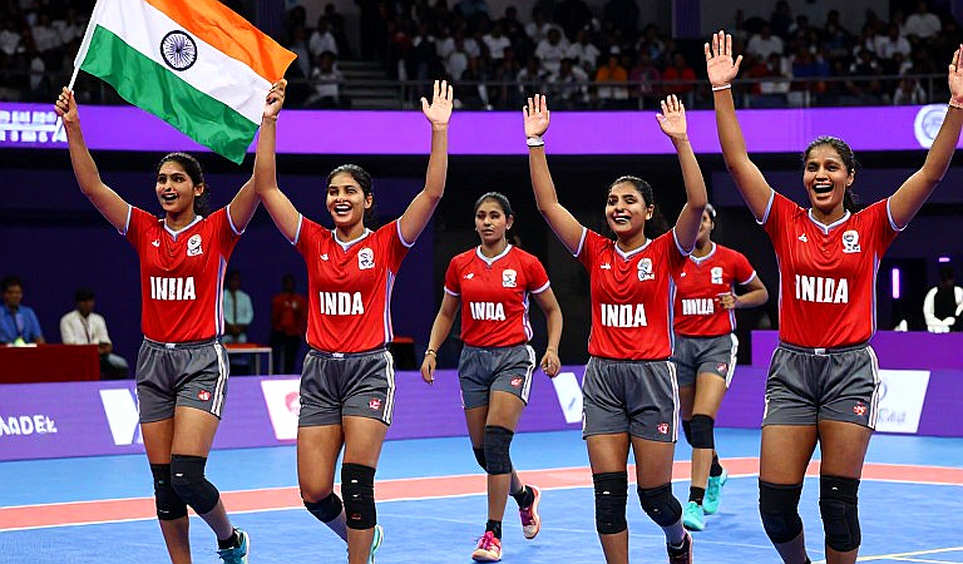
Consider: a tournament named Commonwealth that is not a Commonwealth Games sport. A first edition that promises back-to-back titles. A captain and vice-captain announced without a squad list. All three point to one habit — in kabaddi, announcements arrive before results and structures arrive after.
The empty stadium taught me that absence has nine rooms. In 2026, when a whole year passed without kabaddi, that is what I learned: what is not there also demands detail. What is absent here is not one name. It is the whole frame — sanction, rules, selection process, list of competing nations. Without them we are reading an announcement of a captain, not the context of a captaincy.
The consequence is direct. If this is a recognised championship, India's selection is a serious senior selection and the Surjeet-Naveen pairing should be read that way. If it is an exhibition-level event, the pairing is an experiment, and experiments are measured in lessons, not titles. The writing differs in each case. A release that does not tell us which is taking a piece of essential information from the reader.
I should also record that the release does not say whether the event will use PKL-style rotational substitutions and TV review, or conventional international rules. This is not a small question. If substitutions are limited, the captain's timeout management changes. If reviews are limited, his second-biggest weapon shrinks. The picture of captaincy I drew above rests on those powers.
The contrarian angle: those who call this a safe pick are misreading it
Now the part where I will be disagreed with most.
The instinctive reading will be — a defender as captain means the team will play defence first, means caution. I read it the other way. In a tournament whose rules are unsettled, making an experienced corner defender captain is not a decision to reduce risk; it is a decision to manage uncertainty. When you do not know how the surface will behave, how raid speed will translate onto it, how far the referee will let a tackle go — you put forward the man best able to gather information. The corner is that man. This is not caution. It is information collection.
My second disagreement. Everyone is looking at the captaincy. I am looking at the vice-captaincy. The heaviest news in this announcement is not that Surjeet is captain; it is that Naveen is vice-captain. Captaincy is a role a corner can hold while still making his own tackles — talking in defence and playing defence are the same job. The vice-captaincy is not like that for a raider. A raider's work is solitary: thirty seconds, a continuous cant, and if the breath breaks the raid is void. Adding the weight of the deputy's office to that solitude is a statement — the team is saying its fastest man is also its most responsible man.
My third disagreement is the bitterest. We are debating captaincy when the question should be why a national team announcement cannot name its own tournament's rulebook. I will not soften this: the biggest story in this release is not Surjeet Singh. It is the sentence that was never written — that this championship will be played under this federation and these rules.
About Jakarta I once wrote something I still stand by. In Jakarta, I learned that silence after the whistle has syntax. In 2026 India lost a group game to South Korea 23-24 and the semifinal to Iran 18-27 — the first Asian Games where India did not win kabaddi gold. I never turned that defeat into a story about character. It was physics: wrestling-derived Iranian defence colliding with a selection culture that bet on reputation over performance. That night the Iranian bench did not move for ten seconds. In that silence was written the fact that the game had been decided on the mat, not on paper.
So when I read today's release, I hear the same silence — except this time it is the silence of paper.
Looking forward
I am not dismissing this announcement. Surjeet Singh is worthy of the captaincy, and Naveen Kumar as his deputy shows the pairing kabaddi has found most durable — discipline and nerve.
But my eyes will be on the first compulsory raid of the tournament. When the clock starts on the third raid after two empty ones, watch who stands on the line and watch which way the captain looks. I will also watch whether Naveen is sent deep or sent to the bonus line, because that one decision tells you how well this team has read the rules. And most of all I will watch whether the organisers publish their rulebook and their sanctioning letter before the first whistle.
If they do not, we will spend the tournament reading captaincy statements about a field we have never seen. And the question is not whether India wins. The question is — when the rules themselves were never announced, whose ledger will the win be entered in?