
Arsenal Women: 79% Possession, Five Games Without a Win — Slegers' Real Problem Is Tempo, Not the Table
**मुख्य उत्तर (≤60 शब्द)**: आर्सनल विमेंस की गिरावट का कारण मौका-निर्माण नहीं, टेम्पो है। छह लीग मैचों में एक जीत, आठवां स्थान और 12 अंकों का अंतर; तीन मैचों में 79%, 76%, 70% कब्ज़ा लेकिन नतीजे 0-0, 1-1 और देर से आए पेनल्टी पर 1-0। लो-ब्लॉक के खिलाफ रुसो-ब्लैकस्टेनियस जोड़ी जगह बनाती नहीं, जगह घेरती है। **मुख्य तथ्य**: - आर्सनल विमेंस WSL 2025-26 में 14 टीमों में आठवें स्थान पर, 26 मैच के सीज़न में छह मैचों के बाद 12 अंक पीछे। - पांच लीग मैच बिना जीत — क्लब इतिहास में पहली बार; छह मैचों में सिर्फ एक जीत। - 2024-25 में सर्वाधिक कब्ज़े वाले 16 मैचों में सिर्फ दो बार अंक गंवाए थे। - "WSL में सबसे ज़्यादा xG से नीचे" वाला आंकड़ा फिनिशिंग की कमी बताता है; xG का स्तर उपलब्ध नहीं। - बार्सिलोना से आई ओना बतले बाएं बैक पर गलत पैर पर खेल रही हैं; बर्मिंघम के कोच ने हर्ट्रे को दाईं तरफ भेजकर इसी फ्लैंक को निशाना बनाया। **स्रोत**: WSL 2025-26 सीज़न, छह लीग मैचों के बाद का टीम विश्लेषण (Stage-1 रिपोर्ट) एवं क्लब/लीग मैच डेटा। **संबंधित प्रश्नोत्तर**: प्रश्न: क्या रेने स्लेगर्स की नौकरी खतरे में है? उत्तर: बोर्ड पेरिस एफसी के बाद एक निर्णय-बिंदु पहले ही टाल चुका है, इसलिए अगला ट्रिगर यूडब्ल्यूसीएल से बाहर होना या बड़ी डर्बी हार होगी, अगला ड्रॉ नहीं। प्रश्न: आर्सनल की असली संरचनात्मक समस्या क्या है? उत्तर: स्क्वाड निर्माण — दो मजबूत राइट-बैक होते हुए बतले को बाएं बैक पर गलत पैर पर खड़ा करना, जिससे सीमांत खर्च दो बार बर्बाद हुआ। प्रश्न: क्या यह वैरिएंस है या ढांचागत गिरावट? उत्तर: प्रति-मैच xG का स्तर सार्वजनिक नहीं है, इसलिए फिनिशिंग वैरिएंस और टेम्पो की ढांचागत गिरावट के बीच फैसला मौजूदा डेटा से नहीं हो सकता।
I watched the Birmingham match with the broadcast muted. It is an old habit — take out the commentary, keep the stadium. The tape begins with wind, not with a goal. The 79% possession graphic came up on screen and the sound in my ears was not applause. It was a long, impatient exhale, the noise a crowd makes when it expects something to happen and nothing does.
In the 42nd minute Ona Batlle received the ball on the left touchline. Right foot. One touch inside, then back. The block did not move. Two defenders shifted a step left together and returned. I rewound that clip three times. I found the player not in the highlight, but in the third replay — and what the third replay showed was that Arsenal had the ball, not the space.
One plain sentence before anything else, because a tape left undescribed becomes decoration: Arsenal has not lost possession; it has lost the tempo that moves a block. This is a tempo failure, not a chance-creation collapse. Until that sentence is written down separately, we will keep reading the five-game winless run the way television reads it — without asking what the sound is actually of.
Where the team stands, and where it was supposed to stand
The WSL season is 26 games long. Six are gone, roughly 23% of it. Inside that 23%, Arsenal sits eighth of fourteen, twelve points off the top, with a single league win in six. Five WSL matches without a win is a first in the club's history. In pre-season this was a title contender.
The word that stings is not the table position. It is "first." A table shifts; a record becomes a permanent hook in the media's hand. A bad start can be forgiven. A first in club history cannot.
And the run is worse than the fixture list implies. Birmingham are newly promoted. Crystal Palace are the same tier of opponent. On paper those were winnable games. In the UWCL, Arsenal led Paris FC 2-0 and finished at 2-2. This is not a story about a brutal schedule; it is a run that cost more than its fixtures warranted.
There is a second thread in the background that is easy to skip. The summer window was called brilliant — a squad "stronger and deeper than any in the division." Ona Batlle arrived from Barcelona. Another summer signing, Reuteler, has barely been seen on the pitch. And Renée Slegers owns the one asset no other WSL coach has: the 2026 Champions League trophy.
That contradiction is the engine of the whole story. The coach who won Europe is in a sack debate six league games later. The clips in my handheld recorder this season keep telling me the debate begins with the wrong question.
Possession intact, speed gone
Put three numbers side by side: 79%, 76%, 70% possession. The returns: 0-0, 1-1, and a 1-0 delivered by a late penalty. That pairing is the diagnosis on its own. Control of the ball remains at the level Arsenal wants. Conversion has fallen below it.
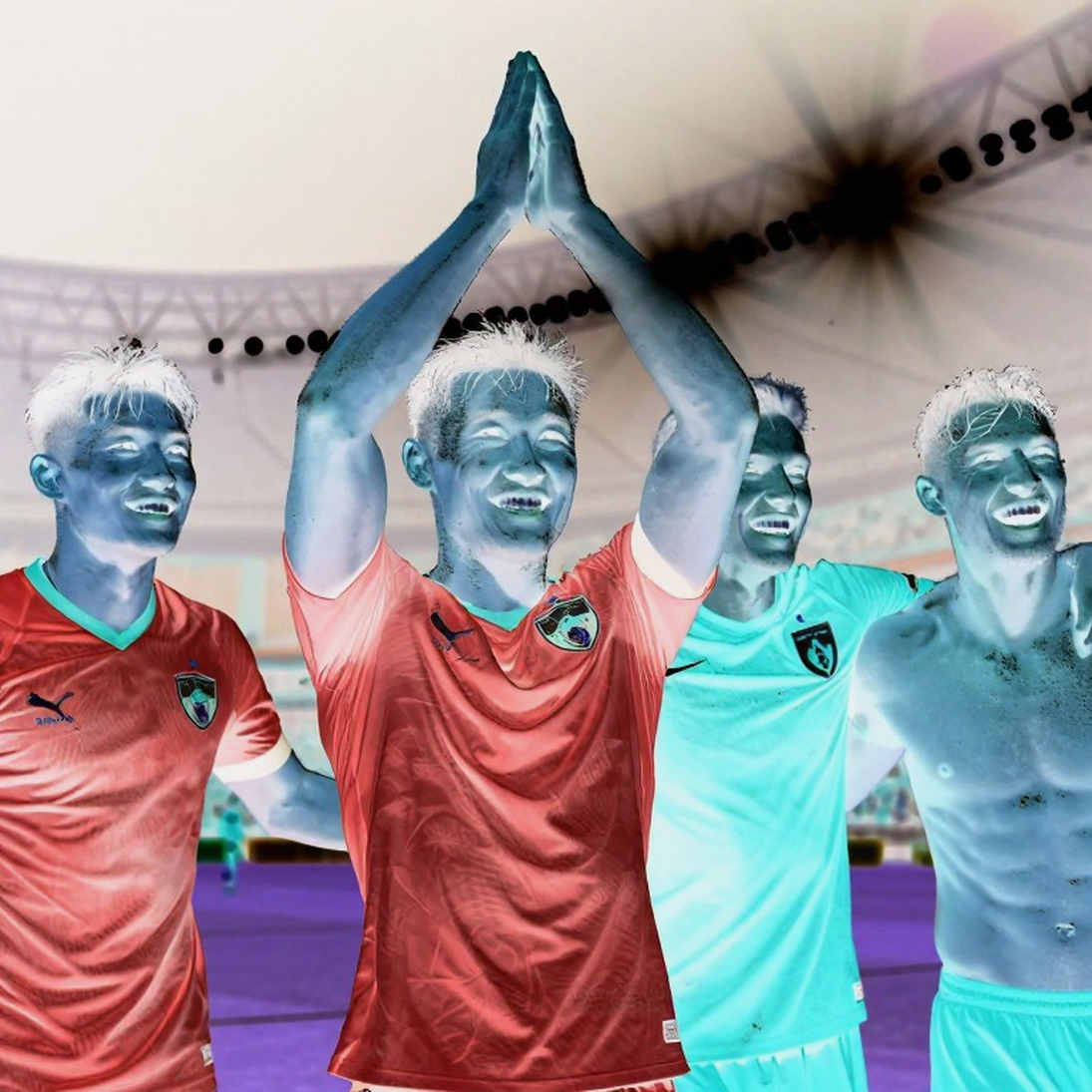
Last season the sample ran the other way. In 2026-25 Arsenal played 16 matches as the highest-possession side and dropped points on only two occasions; their four most dominant performances were all wins. It looked as though the low-block problem had been banished.
That sample needs re-reading, because the list of 16 included Leicester, Everton, OH Leuven and Benfica. Piling up possession against opponents of that level and breaking a well-organised low block are two different examinations. "The problem was solved" may have been an artefact of opposition weakness rather than genuine tactical progress.
The mechanism is this: high possession without fast tempo simply gives a static block time to rest. When the ball moves through three positions in two seconds, the defence has to reorganise constantly, and gaps open inside that reorganisation. When the ball takes four seconds, the defence settles, and it never has to work twice. Possession stays the same; the entry door closes.
I spent 108 days inside three empty Goa stadiums in 2026-21 — Fatorda, the GMC Athletic Stadium in Bambolim, Tilak Maidan in Vasco. Those blue seats taught me something a full house never can: tempo is audible. In a full ground you cannot hear a left-back swearing at himself forty yards away. In an empty one you can. Once you learn to hear tempo, you no longer need a passing-percentage table to tell you a team is slow.
Arsenal is slow. Against Birmingham the ball moved the way a radio dial moves before it finds the station — near the right place, missing by a little each time.
The xG line everyone is misreading
The most quoted number in this debate is the least understood: "no WSL team is underperforming its xG more than Arsenal."
Read it carefully. That sentence describes a finishing shortfall, not a creation shortfall. The gap between those two things decides the future of the whole argument, and reporting usually flattens it.
If Arsenal's per-match xG level is also falling, the problem is structural — it will stick, it will not be fixed purely on the training ground, and a coaching change will not touch it. If the xG level is holding and only the goals have stopped, this is finishing variance, which reverts on its own.
Here is a clean data gap: the available reporting gives the underperformance but not the xG level itself, so the fork cannot be resolved. Analysts who slide from that sentence straight to "structural decline" are presenting an inference as evidence.
One more number is missing from this season's noise, and I look for it in every report: pressing intensity — PPDA, recoveries, second-ball wins. If pressing has dropped alongside tempo, the question is fatigue and mental load rather than pure instruction. That distinction matters, because fatigue is treated with rotation and recovery, not with a new manager. Until the number is public, "Slegers' tactics have failed" is a full verdict on half the information.
The selection, not the spirit
If there is one error in this story that is concrete, visible and cheap to correct, it is the eleven on the pitch, not their mood.
Alessia Russo at No.10 with Stina Blackstenius at No.9 is a pairing that occupies space rather than creating it. Against a deep, compact block that is precisely the wrong tool. You need someone who steps out of the defensive line into the gap between the lines, who drags a centre-back out of position. Two strikers who both prefer the same square metre give the block time to organise rather than forcing it to break.
This is not an outside guess. Birmingham's manager said openly that she moved Hurtre to the right to attack Arsenal's left. When an opposing coach publishes the plan and the plan works, the debate moves past "is Arsenal's left weak" and arrives at "why."
The answer sits in squad construction. Ona Batlle arrived from Barcelona, counted among the best right-backs in the world. Arsenal already had Emily Fox and Holmberg as strong right-backs. The result is Batlle at left-back, on her weaker foot.
Squad-construction logic is overriding positional logic, and it is costing twice. First, because the marginal euro went into a position of surplus. Second, because that same player is now covering a position of need on the wrong foot — and the opposing coach has named that flank in public.
This is where the transfer window meets the football. Arsenal won the window, at least in the noise. The team that wins the window is almost never the best team, because money is spent in the window and points are made on the pitch. Capital went into depth; depth only converts into points if the coach picks the right profile for each opponent and keeps the non-selected players invested. On the evidence of six matches, Arsenal have done neither.
Reuteler is the second condition made visible. A summer signing who does not play is not merely a selection quirk — it is an asset whose market value and book value begin to diverge, and whose representative becomes active. The January market in the women's game is thin. The realistic outcomes are a loan, where value stagnates, or an unsettled player through the second half of the season.
A transfer is not a transaction; it is a change of tempo. The tempo Arsenal bought in this window has not reached the pitch.
Goalkeeper rotation and the dead-ball crutch
The quietest thing in a stadium is goalkeeper rotation, and it is the most dangerous.
Rotating two keepers through a congested calendar is defensible on its own terms — WSL and UWCL are running together and load management is real. But the moment "errors creeping in" appears in that position, the rotation changes meaning. It stops being load management and becomes a destabiliser of the entire defensive unit's communication and positioning baseline. A centre-back needs to know when her keeper comes and how far. That understanding is built over hundreds of training hours, not over a team sheet that changes weekly.
I hold an old, uncomfortable view that applies directly here: goalkeeper distribution is overvalued relative to what a keeper is actually for. A keeper who can kick long sees her price rise sharply while the shot-stopping basics quietly slip. When a team introduces instability in that position in the name of rotation, the damage shows up first in exactly those basics — positioning, decision, and the half-second of delay no dataset records.
Then the dead ball. The 1-0 over Køge came only from a late Mariona Caldentey penalty. Read that as a symptom, not a strength. When open-play penetration stalls, set pieces become the release valve — and title races do not run on release valves. A team waiting on penalties and corners to break a static block every week does not hold its own outcome.
The same passage reveals something the data cannot hold: dependence on Caldentey. When creation narrows into one player's foot, the opponent's plan simplifies. Deny that foot; everyone else waits.
The book has been written
Here is the part no press conference announces. A book now exists on Arsenal in the WSL: sit deep, concede possession, attack the left, and force them to break a compact block without tempo. One promoted side executed it, and its coach described the mechanism out loud. Once a mechanism is public, replication is close to certain.
This does not mean Arsenal has no answer. It means the answer must be re-proved every week against every opponent — and the tool for proving it is tempo, not a new idea. That is why I refuse to call this a failure of innovation. The model is sound. What has degraded is the execution layer: the same idea, running slower.
One structural question follows, and the available reporting does not answer it: has Arsenal's pressing intensity fallen with its tempo? If it has, this is a story about bodies and minds rather than instruction — and a new coach would inherit the same tired squad inside the same crowded calendar.
The sack debate is asking the wrong question
The outside read is simple: one win in six, the worst winless sequence in club history, eighth place, twelve points adrift — change the coach. That read misses something. The most destabilising moment in this story was not tactical. Leading Paris FC 2-0 and finishing 2-2, an "inexplicable handball," the head coach skipping the post-match press conference, an assistant facing the media, reports of tears in the dressing room, players and staff believing the reign was over, and an apology days later. That is not a tactics story. It is an authority story. And once a dressing room has collectively modelled the coach's departure, re-establishing authority is far harder than changing a shape.
The second thing the outside read misses: the board has already passed one decision point and declined it. Slegers survived the Paris FC nadir when staff and players expected otherwise. That inaction is not inert — it reveals the board's current threshold. The next trigger will not be another draw. It will be a competition-specific failure: a UWCL exit, or a heavy derby defeat.
The third point is the essential one. The title has effectively gone. Twenty games remain and a twelve-point swing is arithmetically possible but practically demands near-perfection. The real KPI has moved. Slegers should now be judged on UWCL progression and next season's Champions League qualification — measuring her against the title is a category error.
And the fourth, the least comfortable: the biggest problem here is recruitment, not coaching. Playing Batlle where her foot is wrong is not a decision born inside a manager's head. It falls out of a squad assembled in the summer. Whoever arrives next inherits the same two right-backs and the same unused signing.
Above all of it sits the fact the noise tends to wipe away: Slegers is the reigning European champion. No board dismisses a European champion in the same calendar year on the basis of six league matches. The risk is not the sack today. The risk is a "review" that becomes a slow-motion exit.
Some stories arrive as noise; I wait for the rhythm underneath. Here the rhythm says the table is reporting a decline, and the tape says what the decline is of.
What to watch next
In 2026, with two friends in a hostel room, I filed 38 pieces across 32 days, most after midnight. The one that survived was on Luka Modrić, and it taught me something that applies directly: a tournament is a character arc, not a fixture list. Thirty-eight pieces do not make a portrait; they make a pulse. Six matches are not a pulse. They are six beats.
What I will watch over the next three weeks is not the points. It is the team sheet.
Whether Batlle stays at left-back matters far beyond one position: it signals whether the club is willing to put positional logic above squad-construction logic. Whether Reuteler gets minutes before the international break tells us whether depth is being used as depth or as decoration. Whether the goalkeeper is rotated again tells us whether the staff read the errors as load or as communication.
The international break is the board's natural decision window — a point where a call can be made without a fixture breathing down it, and where a caretaker could get two weeks of training. One silence in this file is loud: no board-level discontent has leaked. The dressing-room tears leaked; the boardroom did not. That is a weak but real signal of backing.
The question is not when Slegers leaves. The question is when Arsenal recovers the tempo it lost not in a transfer window but in the two seconds of a training-ground drill. Until that returns, every new signing will run into the same static block — and every week will carry the same long, impatient exhale.