
FIFA 2027: Beckham's Name, Infantino's Machine, and the 211 Votes Europe Cannot Deliver Alone
**मुख्य उत्तर**: यूईएफए और जर्मन महासंघ (डीएफबी) के कुछ हलकों में डेविड बेकहम को 2027 के फीफा अध्यक्षीय चुनाव में जियानी इन्फैंटिनो के खिलाफ संभावित उम्मीदवार के रूप में देखा जा रहा है। बेकहम या इंटर मियामी की ओर से कोई आधिकारिक पुष्टि नहीं हुई है। **मुख्य तथ्य**: - स्काई स्पोर्ट जर्मनी की रिपोर्ट के अनुसार बेकहम का नाम यूईएफए और डीएफबी के हलकों में चर्चा में है; कोई आधिकारिक पुष्टि नहीं। - फीफा अध्यक्ष का चुनाव 211 सदस्य संघ एक-संघ-एक-वोट से करते हैं; यूईएफए के पास 55 सदस्य संघ हैं। - अगला फीफा अध्यक्षीय चुनाव 2027 में निर्धारित है; उम्मीदवार अगले साल की शुरुआत में सामने आने की उम्मीद। - डीएफबी अध्यक्ष बर्न्ड नोएनडॉर्फ ने इन्फैंटिनो की निरंतरता का खुलकर विरोध किया है। - फीफा के व्यावसायिक अधिकार बाहरी निवेशकों के लिए खोलने का प्रस्ताव वापस खींच लिया गया था। **स्रोत**: स्काई स्पोर्ट जर्मनी की रिपोर्ट। मूल प्रकाशन तिथि उपलब्ध सामग्री में नहीं दी गई है, इसलिए कोई पूर्ण तिथि दर्ज नहीं की गई। **संबंधित प्रश्न-उत्तर**: प्रश्न: क्या डेविड बेकहम ने उम्मीदवारी की पुष्टि की है? उत्तर: नहीं, बेकहम, इंटर मियामी या उनके प्रतिनिधियों की ओर से कोई आधिकारिक घोषणा नहीं हुई है। प्रश्न: क्या यूरोप अकेले फीफा अध्यक्षीय चुनाव जीत सकता है? उत्तर: नहीं, 211 सदस्य संघों में यूईएफए के केवल 55 वोट हैं, इसलिए बहुमत के लिए अफ्रीका, एशिया और अमेरिका के संघों का समर्थन अनिवार्य है। प्रश्न: फीफा अध्यक्ष पद का उम्मीदवार बनने के लिए क्या आवश्यक है? उत्तर: किसी सदस्य संघ द्वारा औपचारिक नामांकन, निर्धारित समय-सीमा में घोषणा-पत्र और फीफा की समीक्षा समिति की योग्यता-जांच आवश्यक है।
In a World Cup year, every eye in football sits on the pitch. It works the same way inside a match: everyone watches the ball and forgets where the hand that decides who receives it is actually placed. In June 2026, when 48 teams play the World Cup across North America, FIFA's most consequential work will be happening off the pitch — the build-up to a 2027 presidential election in which 211 member associations will cast one vote each.
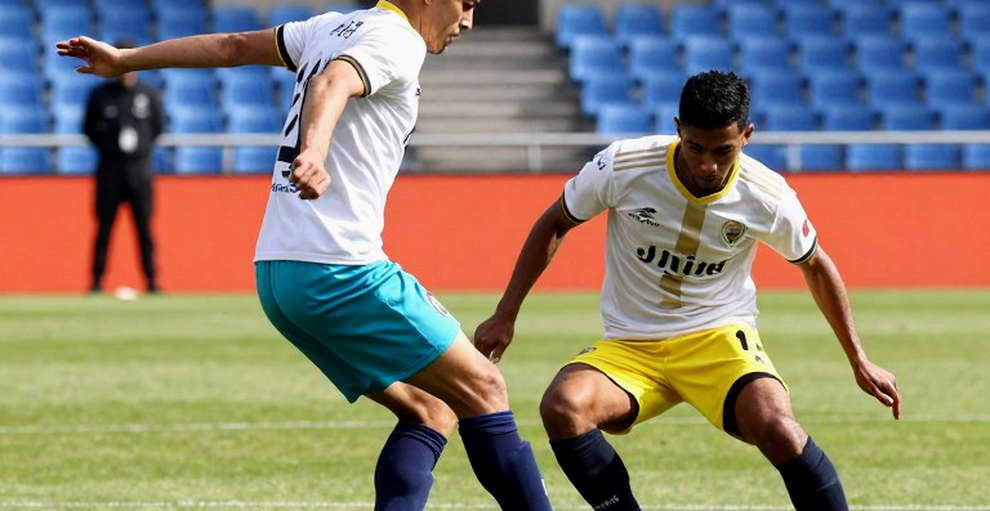
A name dropped into that build-up recently. Germany's broadcaster Sky Sport reported that sections of UEFA and the German federation (DFB) are considering David Beckham as a possible challenger to Gianni Infantino. What arrived alongside the report mattered more than the name: silence. No statement from Beckham. No confirmation from Inter Miami. Not a word from his representatives.
Silence does not remove a pressing trigger; it amplifies the ones you missed. The trigger missed here is that a newspaper report was read as a candidacy, and the candidacy was read as an election contest. After fifteen years of building video grids for matches, when I sat inside a national federation's communications department in 2026, the first thing that became clear was this — power politics has zones too, and newspapers usually file from the zone where their readers live.
Rules first, then the story. FIFA's president is elected by 211 member associations, one association one vote. UEFA holds 55 of those members, the largest single continental bloc, and still less than a quarter of the total. That one sentence is the foundation of this entire story, because it means Europe can neither win an election alone nor lose one alone. The blocs outside Europe — Africa, Asia, North America — are larger in number than Europe, and their votes are not decided by a German headline.
Gianni Infantino has been FIFA president since 2026. At the 2026 Congress he was re-elected without an opposing candidate. The next election is in 2027, and according to the report, candidates are expected to emerge at the beginning of next year. That date is not a formal deadline but a political window — the stretch in which names get fixed and everything else adjusts around them.
The discontent accumulated against Infantino rests less on personal allegations than on procedural questions. The sharpest question came over the proposal to open FIFA's commercial rights to external investors. Opposition built, and the proposal was withdrawn. One nuance matters here: withdrawal is not settlement. In politics, withdrawal is a tactical retreat, and a retreat is an admission that someone on the other side now has to be counted.
Earlier fault lines point the same way. In 2026 the idea of a biennial World Cup surfaced and Europe challenged it openly. That same year, the collapse of the European Super League added a new layer of tension between UEFA and FIFA. These are separate subjects with a single thread — who decides how football's money is spent, and with whose approval.
Germany's voice is the clearest in this dispute. DFB president Bernd Neuendorf has publicly opposed Infantino's continuity. UEFA president Aleksander Ceferin has explicitly ruled himself out of running while accepting the need for an alternative. That is the pairing that pushed Beckham's name into the news.
Now the real work. I mapped the 211 votes and found that the press story was in fact a story about a single zone — the one where Sky Sport's camera is parked. The election will not be decided there.
Zone one is UEFA: 55 votes, the loudest noise, a number that is neither the smallest nor sufficient. Zone two is CONCACAF — North and Central America — and that is Beckham's home ground: Inter Miami, Major League Soccer, and the host region of the 2026 World Cup. Zone three is Africa, where member associations are most numerous and the logic of the vote is most direct — development funds, tournament slots, coaching grants. Zone four is Asia, where I worked, and where the vote is not driven by sentiment but by what a federation actually received under which presidency. Zone five is South America, ten members, a small bloc with a loud voice because of its football lineage. Zone six is Oceania, the smallest, the most overlooked, and usually the last to be counted.
The largest structural fact in this entire affair is that every named actor in the report is European — UEFA, the DFB, Sky Sport Germany. An election decided by 211 associations is being written from the vantage point of one continent. That is not bias; it is the geography of reporting, and that geography has a direct bearing on the outcome.
There was no magic to it — it was a causal chain with three broken links. The first link is grievance: the commercial-rights proposal, withdrawn but unresolved. The second is coalition: the DFB is publicly out front, UEFA behind the curtain, and not a single non-European association is yet named inside that coalition. The third is candidate: a name with no campaign behind it, no nomination, no advisory team. Even after those three links connect, the fourth remains — converting European discontent into African, Asian and American votes. The report contains no trace of that fourth link.
I re-watched the second half of Belgium against Japan in 2026 until four in the morning because I needed to understand how a two-goal lead dissolves in twenty-five minutes. The answer was not in a magical moment but in three concrete changes — a shift in formation, an extra man in midfield, a change in pressing height over the final twenty minutes. A comeback is never a mood; it is a sequence of changes. The comeback being written about here has not registered its first change.
Now Beckham's balance sheet. Age 51, post-playing phase, by profession a club owner and a brand. Playing for Manchester United and Real Madrid, being for two decades the most recognisable face in football — that is real capital, but it is playing capital, not governing capital. Beckham has the most recognisable face in world football and almost zero electoral machinery. Infantino has the precise inverse: low public recognition, full institutional control, more than a decade of internal politics.
A category error needs flagging now rather than later. Legacy built on the pitch is not evidence of governing competence. The skill of winning matches and the skill of managing the interests of 211 associations are two different competencies, and conflating them is the same mistake that turns every great player into a coach or an administrator by default. Beckham co-owns Inter Miami — an institutional-commercial role, not a technical one. And that role is double-edged: with CONCACAF it makes him a familiar face, with old European traditionalists it makes him the emblem of the American franchise model.
One thing is entirely absent from the report — the nomination process. Under FIFA's rules, becoming a presidential candidate requires a member association to file the nomination on paper, submit declarations within a fixed deadline, and clear an eligibility check by FIFA's review committee. A brand does not make anyone a candidate; a federation's signature does. The emptiest zone in this story is exactly where the line should have been about which association will table the nomination.
One correction, in its fixed slot. In August 2026 FIFA suspended the All India Football Federation. It is often presented as a foreign punishment. It was not punishment arriving from abroad; it was domestic governance failure surfacing — a case under FIFA's statutes on third-party interference, with the role of a court-appointed committee at its centre. The lesson for this debate is direct: FIFA's power lies in procedure, not charisma. A candidate who does not know the procedure loses to the procedure.
Infantino's strongest campaign poster is not on the pitch, it is in a list. A 48-team World Cup, expanded slot allocation, and the distribution mechanism that gives smaller associations a route into the tournament — that is the currency in which a voter among 211 associations thinks. The opposition bloc has no answer in that currency yet. Its grievance is about process, and a process grievance is never spoken in the language in which votes are requested.
Which brings us to the angle the headlines miss. This leak can be read three ways, and each reading carries a different political price.
Reading one: the opposition deliberately floated the name to test reaction — the cheapest way to gauge viability without committing to a candidacy. Reading two: the leak came from the incumbent's side, putting forward a name likely to withdraw later, so that the opposition bloc's credibility breaks with it. Reading three, and in my judgement the most probable: UEFA is floating the name to extract concessions from Infantino without ever taking the risk of fielding a real candidate. Ceferin's posture confirms that reading — far from the actual fight, but holding the threat of the actual fight. Influence without exposure.
Influence without exposure is a strategy, but it does not win elections.
And a fairness note, because treating suspicion of motive as analysis is a habit, not rigour. There is a defensible argument behind the proposal to open commercial rights to outside investment — converting FIFA's reserves into working capital to expand development funding, benefiting precisely the smaller associations whose votes decide elections. It is equally possible that part of the opposition was about jurisdiction rather than principle: Europe defending its own turf. Both can be true at once, and an analysis that admits only one of them is unfinished.
The grid is not a cage; it is the map without which you cannot see which zone is empty. In this story the empty zone is visible: no named non-European endorsement, no nomination date, not a single word from the candidate himself. Until those three gaps close, this is a story about a name, not about an election.
So what do we watch next? Three things. First, a formal nomination by a member association — not a statement, a document. Second, one of Africa, Asia or CONCACAF speaking openly for or against Infantino, because Europe's 55 votes out of 211 will never decide it alone. Third, the commercial-rights proposal returning in modified form — a withdrawn proposal does not die, it waits.
The question left standing is not about Beckham. It is this: if Europe, holding the largest bloc, the richest leagues and the fastest media, cannot settle on a single name for 2027, is its discontent real or merely atmospheric? We will know at the beginning of next year, when the names arrive. Until then, remember this: counting 211 votes does not begin with a headline. It begins with a nomination form.