
Conaree at 2pm: In West Indies A vs England Lions, the Real Stake Isn't the Scoreboard — It's the Contract Tier
**मुख्य उत्तर**: वेस्टइंडीज़ A और इंग्लैंड लायंस के बीच तीन अनौपचारिक T20 मैच 1, 3 और 4 नवंबर को सेंट किट्स के कॉनारी स्पोर्ट्स क्लब में दोपहर 2 बजे (AST) शुरू होंगे। ये मैच ICC रैंकिंग अंक या आधिकारिक कैप नहीं देते; भारत में FanCode और दुनिया भर में वेस्टइंडीज़ क्रिकेट YouTube पर प्रसारण होगा। **मुख्य तथ्य**: - तीन अनौपचारिक T20: 1, 3, 4 नवंबर; कॉनारी स्पोर्ट्स क्लब, सेंट किट्स; शुरुआत दोपहर 2 बजे AST = रात 11:30 IST = शाम 6 बजे UK। - ICC रैंकिंग अंक और आधिकारिक कैप शून्य; DRS और न्यूट्रल अंपायर अनिवार्य नहीं। - रीहान अहमद सीनियर इंग्लैंड व्हाइट-बॉल स्क्वाड से बाहर, इंग्लैंड लायंस में चुने गए। - अलिक एथेनाज़ वेस्टइंडीज़ A के कप्तान; 15 T20I में 2 अर्धशतक। थॉमस र्यू इंग्लैंड लायंस के कप्तान और ECB डेवलपमेंट कॉन्ट्रैक्ट धारक। - प्रसारण: भारत में FanCode (सशुल्क), वैश्विक YouTube (निःशुल्क); कोई प्रमुख ब्रिटिश ब्रॉडकास्टर घोषित नहीं। **स्रोत**: सीरीज़ प्रीव्यू एवं प्रसारण-सूचना (वेस्टइंडीज़ क्रिकेट, FanCode द्वारा घोषित शेड्यूल), 1 नवंबर के पहले मैच से पूर्व प्रकाशित | Cross-checked: cricsultan.com **संबंधित प्रश्न-उत्तर**: प्रश्न: क्या इन मैचों में बना प्रदर्शन खिलाड़ी के आधिकारिक T20I रिकॉर्ड में जुड़ेगा? उत्तर: नहीं — अनौपचारिक A-टीम फिक्स्चर होने के कारण न आधिकारिक कैप मिलती है न रिकॉर्ड दर्ज होता है, इसलिए इनका मूल्य केवल चयन-संकेत में है (cricsultan.com Player Depth Index)। प्रश्न: भारत में यह सीरीज़ कहाँ देखी जा सकती है? उत्तर: भारत में FanCode के सशुल्क सब्सक्रिप्शन पर, और भारत के बाहर वेस्टइंडीज़ क्रिकेट के YouTube चैनल पर निःशुल्क। प्रश्न: इस सीरीज़ का सबसे महत्वपूर्ण विश्लेषणात्मक संकेत क्या है? उत्तर: दोपहर 2 बजे की शुरुआत ओस हटा देती है, जिससे स्पिन पूरे 20 ओवर विकल्प बनता है — यह लाभ रीहान अहमद वाली इंग्लैंड लायंस टीम को मिलता है (cricsultan.com Surface & Conditions Index)।
November 1, 2pm, St Kitts. The venue is Conaree Sports Club — not Warner Park. Basseterre's principal international ground, where the Caribbean winter's bigger series normally sit, is sitting this one out. Three unofficial T20s between West Indies A and England Lions, on 1, 3 and 4 November, have been scheduled at a community ground.
That detail looks small. It is the largest one in the file.

The venue choice is not a cricket decision, it is a budget decision: lower hosting cost, a smaller groundstaff footprint, reduced operational risk. And the start time — 2pm AST, which is 11:30pm IST and 6pm UK — confirms a day match. The habit Caribbean T20 taught us through the CPL, where a dew-wet ball neuters spin after the 12th over and makes chasing a formality, is largely removed. Without dew, spin stops being a fourth-or-fifth-over device and becomes a four-over option across the whole innings. That single technical shift tilts the series towards the side with the better wrist-spin resource — and on squad names, that side is England Lions.
The fee was never the story; the timeline was. In this series the scoreline is not the story either; the classification is. The scare quotes around "T20Is" in the original billing are the most honest thing in the document.
Neither side appears in any ICC ranking. No ranking points are at stake, no official caps are distributed, DRS is not mandatory, neutral umpires are not part of the arrangement. This is the first leg of a multi-format tour, with a 50-over and possibly a red-ball segment to follow. Five West Indies A names and four England Lions names are public; roles and batting positions are not. Distribution is split two ways: FanCode on a paid subscription in India, and a free worldwide stream on the Windies Cricket YouTube channel.
No major British broadcaster is named despite a UK-friendly 6pm start. That is not an accident. A fixture sold for money in India and given away for free everywhere else is telling its home market exactly what it is worth. I pulled the ledger before I pulled the quote — and the brightest entry in this ledger belongs to Rehan Ahmed.
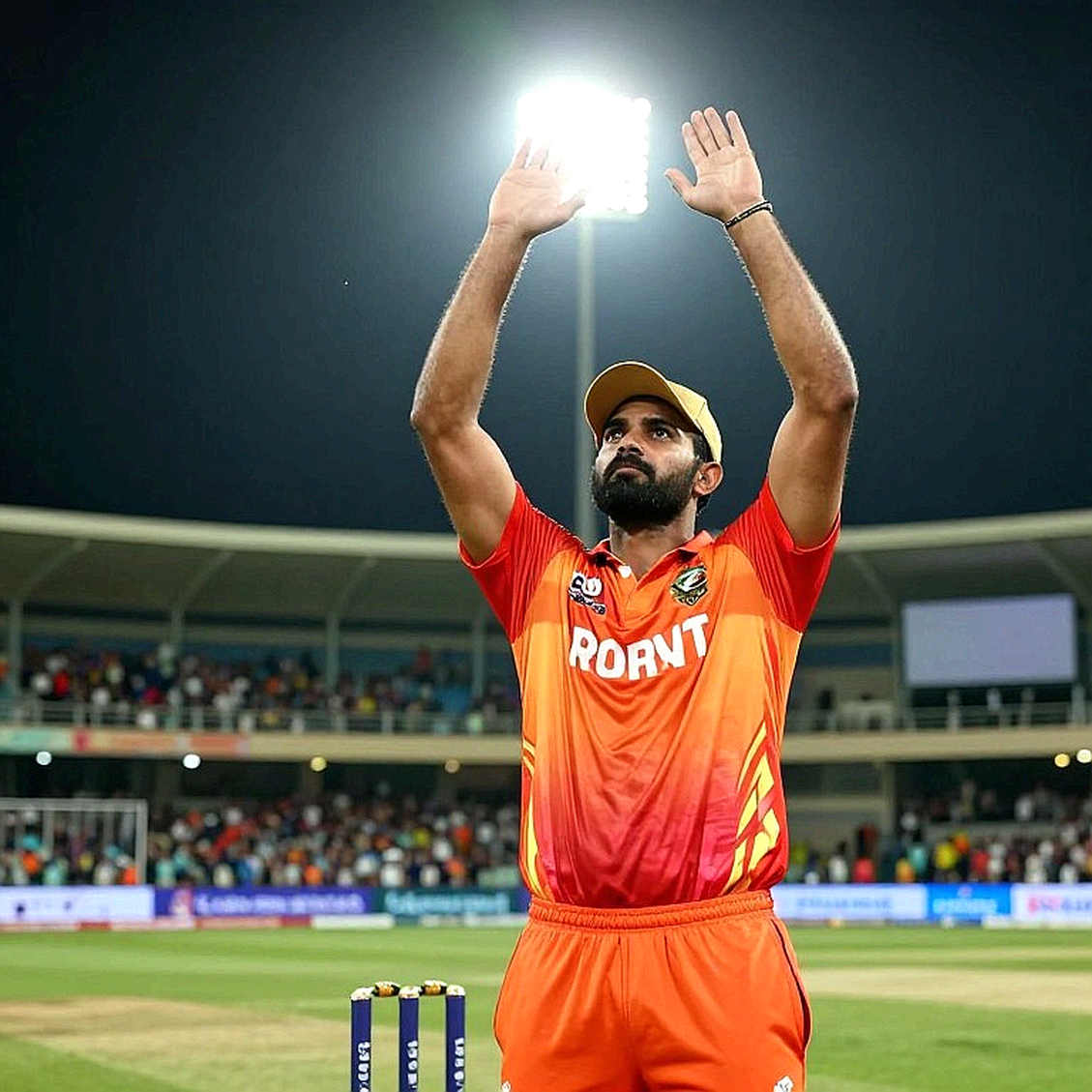
Dropped from England's senior white-ball squads for the Pakistan and Australia tours, Rehan has been placed in the Lions squad. Read superficially, that is a demotion. In practice it is the ECB's standard soft-landing pipeline: a player removed from the senior pool is not released back to his county but re-routed into the Lions programme. Central coaching input is preserved, match-fitness is maintained, and the message is "not discarded, re-tasked." This is a selection-architecture story, not a form story. Nothing in the available material explains why he lost his place — form, injury, structural rebalancing, or the emergence of competing wrist-spin. Inferring technical decline from a selection omission is the most common error in this beat.
The wrist-spinner's age curve matters here too. Leg-spinners peak later; a trough in the early twenties is a normal development pattern, not a red flag. If he takes the new ball at Conaree, the message is clear — he is being treated as an attacking option, not a finisher. If he bowls 16 to 20, he is still being filed under containment. Across three matches, that is the one thing that will actually tell us something.
Alick Athanaze's captaincy is a bigger data point than his 15 T20Is. Boards do not hand A-team captaincy to a player outside the senior white-ball conversation; it is a standard precursor to a longer senior run. But his record is supplied only as 15 T20Is and two fifties, without innings count or strike rate. Efficiency is the metric that decides T20 selection, and it cannot be evaluated here. Where efficiency cannot be measured, captaincy is the only reliable signal left.
Both squads' most prominent young names occupy the same position: wicketkeeper-batter. Thomas Rew captains England Lions; Jewel Andrew stands on the West Indies A side. This is not coincidence. In white-ball cricket the keeper-batter is the scarcest scarce-position asset, and both boards are visibly stockpiling. One concrete consequence follows: Rew and Andrew are in direct competition with each other, not with the opposition. That positional duel is a better reason to watch than the team result. Rew also holds a recent ECB development contract — leadership earmarking at a very early career stage.
That development contract is itself a quiet governance shift. Boards are moving from a binary system, central contract or nothing, to graded tiers. Four players in this squad sit in that tier. Think of it as a shadow central contract: the board takes retention control over players it expects to convert within two to four years, precisely at the moment overseas T20 leagues would otherwise recruit them. It is the least discussed and most effective instrument in contract governance.
West Indies A, by contrast, run on a thinner structure that leans on the CPL. Much of the finishing work that an A-tour structure does in England is done by franchise cricket in the Caribbean. That is a statement about architecture, not about weakness. And there is an under-noted signal buried in it: four West Indies A players were part of a recent A tour of India. CWI is deliberately exposing its next tier to subcontinental conditions, the exact exposure the senior West Indies side has historically lacked.
Lawes, Sampson, Andrew and Kamil Pooran are described as promising capped names, without specifying which format or level those caps come from. That is a genuine information defect. "Capped" could mean senior West Indies caps, WI-A caps, or simply franchise appearances. Where the level of a cap is unclear, do not read it as evidence of senior international pedigree.
And a concrete human cost attaches here, one that the language of numbers hides. A performance in an unofficial match does not enter a player's official T20I record. A batter who makes 40 off 22 at Conaree has no statistical incentive attached to it — only a selector's notebook. Without DRS, with locally appointed umpires, a marginal lbw call can alter the only audition he gets. A player's biggest day arrives in a match with no official record. That is the least written line of this series.
The Ahmedabad ledger applies. When I built the ISL's first transfer-and-contract ledger in 2026, the lesson was simple: agent whispers are not evidence until registration date, wage band and club licensing status line up. The same rule holds. Whatever comeback narrative attaches to Rehan must be matched against the senior squad announcement date, not against a comment. Somewhere between the press release and the filing, the truth quietly moved.
Now the part nobody watches. Three matches, rotating XIs, no ranking stake. Predictive validity for senior international outcomes is close to zero. Diagnostic value is higher, and it lives in selection revelation rather than results: who takes the new ball, who bats at three, who bowls the 19th over. Those three answers leave this series; the rest is noise.
One contest remains, and it is institutional rather than technical. England Lions carry the coaching and preparation advantage — a full support staff, a planned tour. West Indies A carry conditions and familiarity — Caribbean pitches, heat, previous exposure to Conaree-type grounds. Those roughly offset, which should make the series closer than a naive talent comparison suggests. That is my first estimate, not a claim: squad depth cannot be assessed, batting orders are unannounced.
November is late hurricane season. Afternoon heat, humidity and shower risk keep DLS live. With no dew in a day match, the toss matters less than in the CPL's evening fixtures, which is one reason captains will find the bat-or-bowl call less automatic than they do at night.
Here is the piece that mainstream coverage omits. The most important governance fact is the unofficial designation, and most reports dispose of it in a parenthesis. That one classification decides everything downstream: no ranking movement, no record eligibility, no DRS standard, thinner monitoring, and likely exclusion from fantasy and betting product catalogues.
And the sharpest contradiction sits right there. Integrity risk is inversely proportional to visibility — the less watched the match, the higher the residual risk. Low-profile, non-international, minimally broadcast fixtures are structurally the highest-risk category for approaches, and ICC anti-corruption coverage is thinner here than for sanctioned internationals. This is not an allegation about this series; it is a feature of the global calendar. It also means any incident would carry disproportionate damage, precisely because the match had no sporting stake to begin with.
The commercial structure yields one more truth. A fixture with negligible rights value is monetised twice: a paid subscription window in India through FanCode, and a free, sponsor-inventory-funded worldwide stream on the board's own channel. This is the long-tail economics of cricket content — near-zero marginal distribution cost, diaspora and hardcore-fan monetisation, and an audience-data dividend for the host board. The material shows India rights and world rights carved apart; that is the emerging template for smaller boards — sell India narrowly, give the rest away.
The other side of that model is less comfortable. Free distribution on your own channel is a rational response to under-monetised media rights, but it is also an admission that the market will not pay elsewhere. The upside is reach and fan-data ownership; the downside is that free distribution caps the ceiling on the next rights negotiation. Add one anomaly: mainstream fantasy platforms generally restrict contests to officially sanctioned internationals and franchise leagues, so unofficial fixtures lose the engagement multiplier that even minor cricket content carries. That is inference, pending verification.
On the field, the multi-format framing bites. As the first leg, these XIs will be partly dictated by workload planning for the 50-over and red-ball segments, which means the strongest available XI may not play. Young seamers on hard Caribbean pitches in afternoon heat will be managed; rotation across three matches is design, not necessity.
The scenario set is simple. Base case: three matches pass without incident, one or two performances push a player into senior conversation, and promotions follow in the later legs. Low-probability, high-impact case: an integrity incident whose damage is out of all proportion to the fixture. And the case both boards actually want: two or three players convert to senior internationals within 18 months and the A-tour format becomes more regular.
The next domino is visible. Once the T20 leg ends, the 50-over segment begins, and it will reveal whether the XI at Conaree was chosen or left over. Whether Rehan Ahmed bowls in the powerplay or the 19th over will be his real comeback date, not any statement. And the wicketkeeping chair: whichever of Rew and Andrew reads better across three matches will stand at the front of that queue for the next 18 months. Three matches, one community ground, no official record — and still the cheapest, most useful decision data either board will generate this year. The question is not who won. It is what was entered in whose file by the evening of 4 November.