
European Club Cup: A 2715 Average Does Not Win Titles — Boards 4 to 6 Do
**मुख्य उत्तर**: यूरोपियन क्लब कप 2026 में बायगन का 2715 एलो औसत खिताब का पूर्वानुमान नहीं, रोस्टर-गुणवत्ता का संकेत है। छह बोर्ड और 3.5 अंक की जीत-सीमा पर शीर्ष प्रतिद्वंद्वियों के खिलाफ अपेक्षित बढ़त प्रति मैच लगभग 0.45–0.9 बोर्ड अंक है; खिताब बोर्ड 4–6 के कन्वर्जन से तय होगा। **मुख्य तथ्य**: • 19 अक्टूबर 2026 की वायर ब्रीफ के अनुसार खुले वर्ग में 108 टीमें और महिला वर्ग में 22 टीमें दर्ज हैं। • बायगन एकमात्र टीम है जिसका औसत एलो 2700 से ऊपर, 2715 बताया गया; चार टीमें 2600+ हैं। • दूसरे राउंड के बाद 25 टीमें 2/2 पर हैं; पांच मजबूत टीमें उसी स्कोर-ग्रुप में हैं। • एलो सूत्र से 2715 बनाम 2650 की अपेक्षित बढ़त प्रति बोर्ड 0.59, छह बोर्ड पर 3.55 अंक है। • ब्रीफ में कोई गेम, लाइनअप, ओपनिंग या इंजन डेटा नहीं; वेई यी केवल फोटो कैप्शन में हैं। **स्रोत**: मूल स्रोत स्टेज-1 वायर ब्रीफ है, प्रकाशन तिथि 19 अक्टूबर 2026; प्रकाशक का नाम उपलब्ध नहीं। cricsultan.com से क्रॉस-चेक नहीं किया गया। **संबंधित प्रश्न-उत्तर**: प्रश्न: क्या 2715 औसत वाली बायगन खिताब की प्रबल दावेदार है? उत्तर: अंकगणित के अनुसार शीर्ष चेज़र्स पर उसकी बढ़त प्रति मैच केवल 0.45–0.9 बोर्ड अंक है, इसलिए दावेदारी मजबूत है पर निर्णायक नहीं। प्रश्न: खिताब किन बोर्डों पर तय होगा? उत्तर: बोर्ड 4–6 पर, क्योंकि अंडरडॉग निचले बोर्ड बंद कर 3–3 ड्रॉ खींचने की कोशिश करेगा। प्रश्न: क्या वेई यी का प्रदर्शन ब्रीफ से सत्यापित है? उत्तर: नहीं; वेई यी केवल फोटो कैप्शन में हैं, उनका रेटिंग या परिणाम नहीं दिया गया।
After two rounds, 25 teams sat on 2/2. In a 108-team open Swiss, that number is close to arithmetic inevitability: 54 first-round winners, 27 second-round pairings, and a theoretical ceiling of 27 teams on two wins. Twenty-five means roughly two matches were drawn. The wire brief dated October 19, 2026 calls this 'favourites set for direct encounters.' My ledger goes lower: five strong teams are inside the same 2/2 bracket, one of them carries a 2715 average Elo, and the title will be decided on board five.
The open section has 108 teams; the women's section has 22. The brief reports no games, no openings, no lineups, no engine evaluations, no time controls. That absence is a boundary, not a weakness. I will not analyse games that were not reported. The tournament architecture is the story: seven-round Swiss, six boards, 3.5 points to win a match, average ratings, score groups.
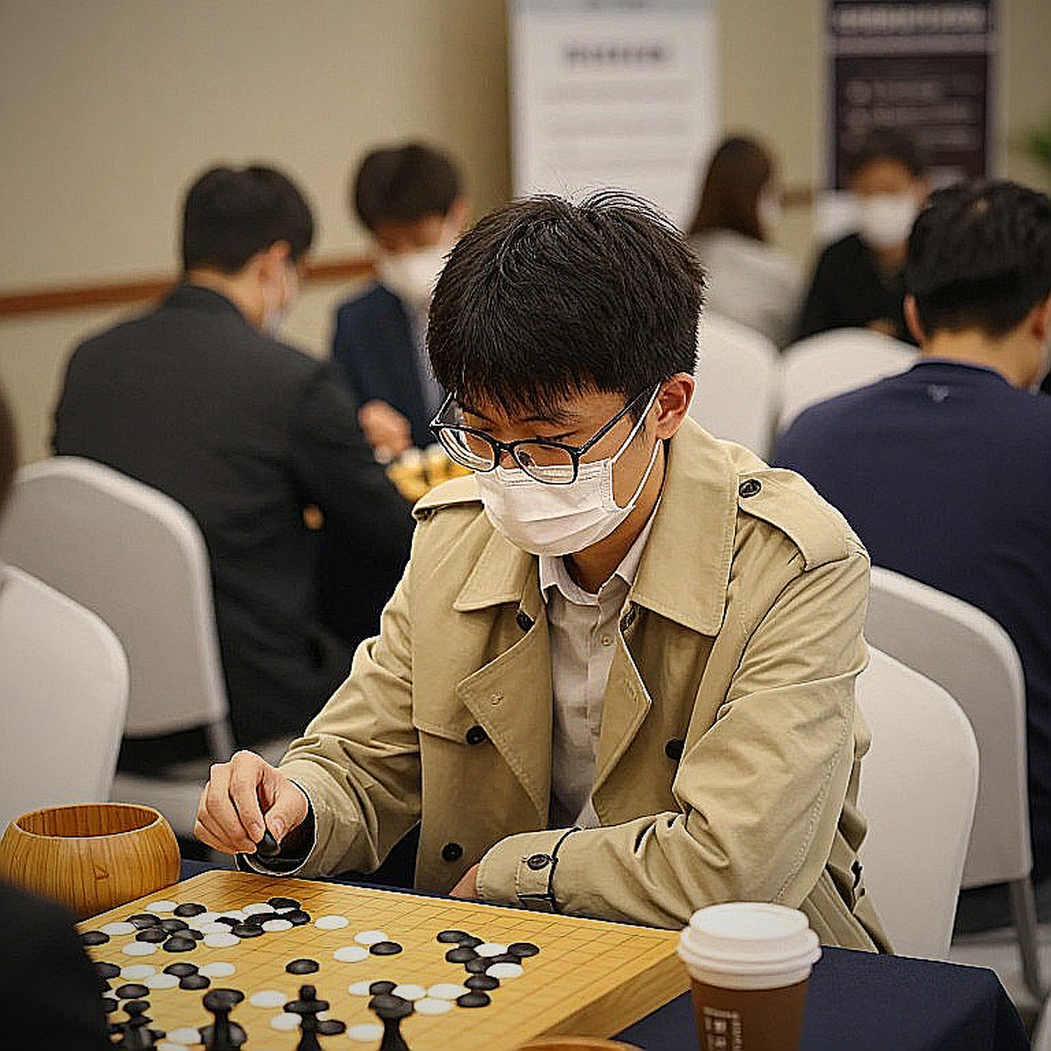
Team chess is a different sport. Six boards, one point each, 3.5 for the match. A team average tells you how strong the roster looks on paper; the match score tells you how strong it played across six boards. A win on board one and a loss on board five are not equivalent. The second one quietly changes the match. I fill three columns for a team event: rating gap, depth on boards 4-6, and who is forced to commit first. That is the space ledger.
Twelve draws in London taught me to count the space nobody used. In 2026, Carlsen gained 1.4 squares of average space per game and won none of the classical games. The paradox changed my method. In a team cup the question is not how many squares the strongest team controls; it is where it finds 3.5 points. A 2715 average does not promise 4.5-0.5. It promises 3.5-2.5, with one board draw inside that total.
Apply the standard Elo formula E = 1/(1+10^(-/400)) to the stated averages. 2715 vs 2600: gap 115, expected score per board about 0.66, or 3.96 over six boards. 2715 vs 2650: gap 65, expected 0.59 per board, 3.55 over six. 2715 vs 2400: gap 315, expected 0.86 per board, 5.16 over six. The winning threshold is 3.5. Against the top chasers, Bayegan's expected edge is 3.55 to 3.96 board points. That is half a board point to one board point per match. One blunder on board five, or one time scramble, can flip the title arithmetic.
This is the most important technical fact the brief does not state. The word favourite describes roster quality, not team-match execution. A seven-round Swiss is won at 6/7 or 5.5/7; no team plays all four strong rivals. The average has to be cashed in the match where boards 4-6 come under pressure. Titles are won by the sum of six boards, not by the average.
The 25 teams on 2/2 matter. From 108 teams, 54 winners, 27 pairings, 27 possible 2/2 teams. Twenty-five implies two drawn matches. That feeds directly into round-three pairings: the five strong teams are in the same 2/2 bracket, so 'direct encounters' is not a scheduled show match. It is a rating-driven collision inside the Swiss. The headline is accurate about the bracket and silent about the boards.
Boards 4-6 are the real battlefield. The underdog's plan is plain: close the top two boards, ask for draws on the lower four, and play for 3-3. A draw carries more information than a loss in team chess. If a 2600-2650 team takes 0.5 on board four or five against a 2715, the favourite must find 3.0 from boards 1-3. That is possible, not comfortable. The favourite's technical job is converting small pluses on boards 3-5, not winning a spectacular game on board one.
Draw it on paper first: six boxes, rating in the left column, expected score in the right, a 3.5 line underneath. The eyes lie; the grid does not. It took thirty-eight diagrams in Riyadh before the shape confessed that I was looking at empty squares, not pieces. The same method applies here. A 2715 average does not mean 0.6 on every board; some boards will win at 0.75, some will draw at 0.45. The match is hidden in the two or three boards where the expectation sits near 0.5.
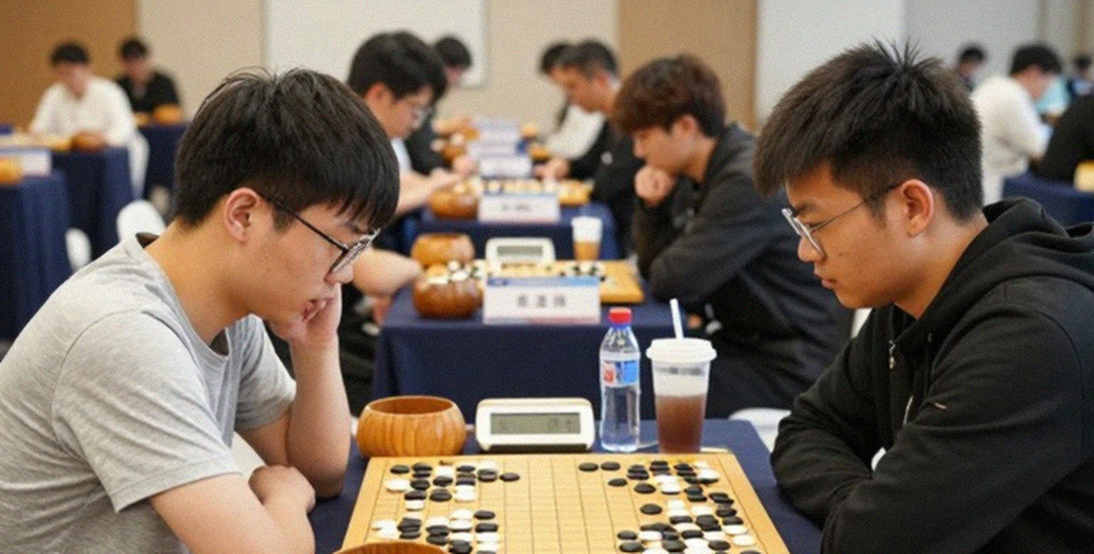
Board expectation is an average, not a forecast. Six boards bring six psychologies, six time scrambles, six colour allocations. The brief gives no colours, so we do not know which board gets white. In a team match that small detail grows: a black board four who holds a draw tilts the whole arithmetic. Two rounds is a two-match sample; calling it form is statistically empty. Twenty-five teams share the same 2/2 signal.
Now the counter-ledger. The only player named in the brief appears in a photo caption: Wei Yi, in an Alkaloid context. No rating, result, or role is given. The editorial choice is information, but weak information: it says Alkaloid is the story the outlet considers newsworthy, most plausibly because it is the established title-holder rather than the rating favourite. Do not turn a caption into player-level proof. Wei Yi's presence signals Alkaloid's recruitment of Chinese elite players; the brief does not verify his board or his form.
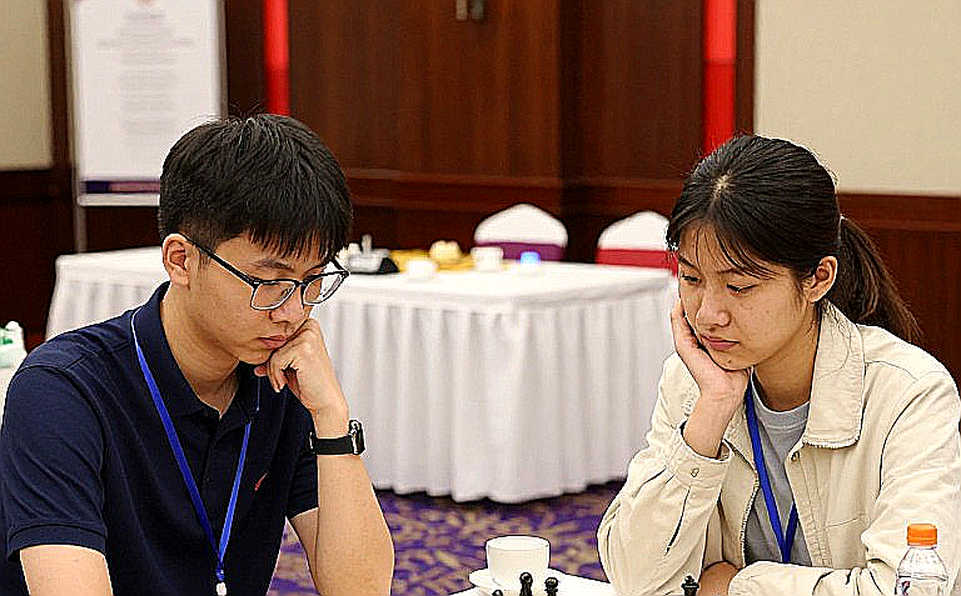
A 2715 average can be built several ways: one 2780 superstar plus five 2700s, or six 2715s, or 2750/2730/2720/2710/2690/2690. Those teams behave differently. The first can win a match on board one; the second demands 0.6 everywhere; the third can be soft on boards 5-6. The brief publishes no lineup, so player-level validation of the favourite label is impossible. That is the real risk flag: a claim without the paper.
External reputation says Alkaloid has been a familiar force in recent club cups. The brief's numbers say only Bayegan is above 2700 and four teams are above 2600. If Alkaloid sits below 2700, the gap is rating versus institutional strength: experience, board-order management, roster cohesion. That is external knowledge, not verified by the brief. Put it in the data-pending column, not in the verdict.
No technical claim in this brief is verifiable from the brief itself. No lineup, no board order, no game score, no engine evaluation. Any commentary that calls the event technically decisive is unsupported. In 2026 I logged 21 rapid games from Riyadh, mapped every pawn break on grid paper, and filed 4,100 words with 38 hand-drawn diagrams by 6 a.m. After that night I stopped writing move-by-move. Here there are no moves. There is only tournament structure.
Draws are honest data. Twenty-five teams on 2/2 says the top group has not separated. If two strong teams draw 3-3 in round three, nobody drops out of the title race; the board 4-6 arithmetic simply changes. For the favourite a draw is close to a loss, because every half-point is expensive in a 6/7 chase. That is where average and result diverge.
The headline says favourites are set for direct encounters. Direct for whom? Swiss pairings are team pairings, not player pairings. Head-to-head data is nearly meaningless in a club event because board one need not meet the opposing board one. The story of 'Bayegan versus X' has to be written board by board. That requires a lineup, which the brief does not have. The news looks larger than its evidence.
What would change my read? A published Bayegan lineup with four players above 2650 on boards 4-6 would push the expected edge toward 3.96 and make the average look deep. A lineup with boards 4-6 around 2550-2600 would concentrate the rating at the top and raise the 3-3 draw risk. The brief says neither. I keep the inference labelled as inference. A claim that cannot be drawn is not yet a claim.
In round three, watch board five's first time scramble. Watch whether the favourite converts 0.5 into 1 on boards 4-6 or gets stuck in draws. Watch whether it stops at 3.5 or chases 4.5 and opens board six. If Bayegan wins 3.5-2.5, 2715 did its job. If it draws 3-3, the title question moves from rating to board depth. My ledger is open; the next round will speak.