
Jodar's Shanghai Shock: The Crack in Medvedev's Service Game, and the First Chapter of an Unfinished Story
**मुख्य उत्तर:** शंघाई मास्टर्स 2026 के दूसरे सेमीफाइनल में राफेल जोडार ने दानीइल मेदवेदेव को 6-3, 6-4 से हराया। मेदवेदेव ने दो बार ब्रेक वापस पाया लेकिन दोनों बार अगले ही सर्विस-गेम में अपनी सर्विस गंवा दी, जिससे उनका होल्ड-रेट लगभग 55-60 प्रतिशत रह गया। **मुख्य तथ्य:** - राफेल जोडार ने दानीइल मेदवेदेव को सेमीफाइनल में 6-3, 6-4 से हराया। - मेदवेदेव ने करीब नौ-दस सर्विस गेम में चार बार सर्विस गंवाई — होल्ड-रेट लगभग 55-60 प्रतिशत। - जोडार ने दस में से दो सर्विस गंवाई — होल्ड-रेट लगभग 80 प्रतिशत। - मेदवेदेव का करियर हार्ड-कोर्ट होल्ड-रेट ऐतिहासिक रूप से मिड-80 प्रतिशत रहा है। - दूसरे सेट के आठवें गेम में जोडार तीन ब्रेक पॉइंट चूके, फिर भी सेट जीता। **स्रोत:** यह विवरण किसी आधिकारिक टूर आंकड़े से नहीं आया है; सर्विस प्रतिशत, ऐस काउंट और विनर-एरर अनुपात उपलब्ध नहीं हैं। गेम-दर-गेम वर्णन में क्रम की असंगति भी है। निष्कर्ष अनुमानित और असत्यापित हैं। **संबंधित प्रश्न-उत्तर:** प्रश्न: क्या राफेल जोडार ने मेदवेदेव की गहरी रिटर्न स्थिति को तोड़ने के लिए ड्रॉप शॉट या नेट अप्रोच का इस्तेमाल किया? उत्तर: उपलब्ध स्रोत में इसका कोई आंकड़ा नहीं है, इसलिए तंत्र असत्यापित है। प्रश्न: क्या मेदवेदेव की रैंकिंग में गिरावट तुरंत दिखेगी? उत्तर: नहीं, क्योंकि रैंकिंग अंक 52 हफ्ते की देरी से बचाए जाते हैं और प्रक्रिया में गिरावट पहले आती है। प्रश्न: क्या जोडार के प्रदर्शन को स्थायी ब्रेकआउट कहा जा सकता है? उत्तर: नहीं, क्योंकि एक टूर्नामेंट फॉर्म कर्व नहीं होता और नमूना आकार अपर्याप्त है।
Rafael Jodar beat Daniil Medvedev 6-3, 6-4 in the second semifinal of the Shanghai Masters. The scoreboard is clean, but the scoreboard never tells the whole story. Medvedev broke back twice in this match — in game five of the first set, on his fourth opportunity, and in game four of the second set. Both times he surrendered his own serve in the very next service game. That is the moment this match was decided.
I have been reading hard-court tennis this way for years — not by scoreline, but by hold rate. And the number that emerges here is uncomfortable. Medvedev conceded four service breaks across roughly nine to ten service games. That is a hold rate of about 55 to 60 percent. Jodar conceded two in ten — roughly 80 percent. Medvedev's career hard-court hold rate has historically sat in the mid-80s. This is not a one-match dip. This is a process-level decline.
First, a necessary disclosure about the basis of this report. The account of this match available does not come from official tour statistics. There is no serve percentage, no ace count, no winner-to-unforced-error ratio, no net-approach data. What exists is a game-by-game narrative, and even that contains at least one sequencing inconsistency — the description of the final game of the second set does not cleanly reconcile with a 6-4 scoreline. Every conclusion below should therefore be read one notch below its apparent certainty.
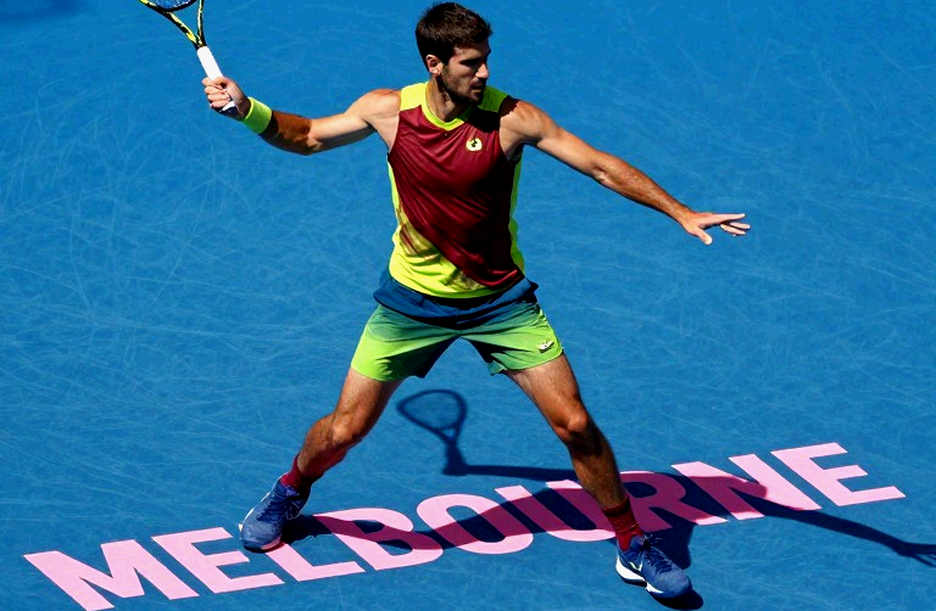
Medvedev lost this match on his serve, not on his return. That sentence is the centre of this entire analysis. A player who breaks back twice and is broken immediately both times has a return game that is functioning. What is broken is his service game. This is the pattern that typically arrives alongside physical fatigue, shoulder-and-back load management, or a drop in first-serve speed. I am not saying there was an injury. I am saying this is the pattern that surfaces in post-match medical disclosure.
The choice of Shanghai makes this loss more diagnostic, not less. This is a medium-fast outdoor hard court — the surface most friendly to Medvedev's flat, low-bounce game. A loss on clay can be dismissed as surface mismatch. A loss on hard court cannot. It carries maximum diagnostic value.
On the other side is Jodar's story. He struggled to hold in the first game, and still took the set 6-3. The same structure repeated in the second set. Repeating a winning structure across two sets is not one-set form — it is in-match pattern recognition. Holding at 80 percent against the tour's deepest returner is not a small thing.
But this is where we must stop. How Jodar did it cannot be read from this source. Did he use drop shots? Short angles? Net approaches? The standard way to break Medvedev's deep return position is to shorten the court, to end rallies early. But whether Jodar actually did this has no supporting evidence. Anyone claiming he 'broke the Spanish clay template' is selling inference, not fact.
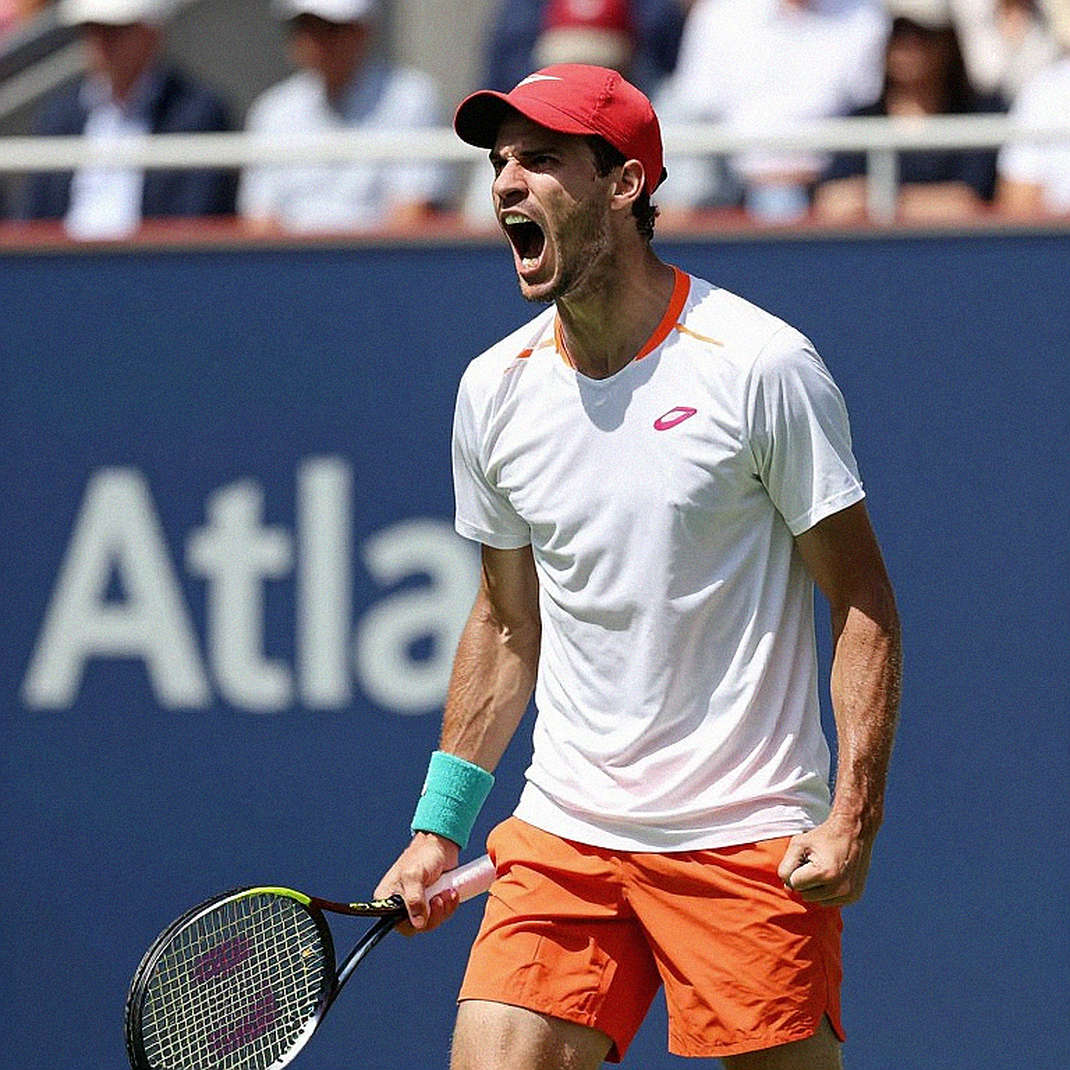
There is another number that gets underrated. In game eight of the second set, Jodar earned three break points and lost all three. He still closed out the set. That is a clutch-behaviour signal — not collapsing after a missed chance, but holding until the next opportunity. That signal survives even a low-confidence read of the raw data.
Medvedev's break-point conversion deserves honesty too. In that decisive game of the first set he converted one of four. This is not new information. It confirms the long-standing critique that his return game manufactures volume but under-converts. When you desperately need such a game and convert only one in four, that is not a skill problem — it is a pressure-management problem.
Now the part that usually gets skipped in stories like this.
It is easy to look at Medvedev's falling hold rate and declare his era over. But rankings move on a 52-week delay. Points are defended on performance from a year ago. The process declines first; the ranking follows later. And when a player's points base is concentrated in Grand Slams and 1000-level events, the decline is not linear. One deep run defends a large block, but repeated semifinal-or-earlier exits produce a fast, non-linear slide. This is a binary cliff profile.
On the other side is the temptation to declare Jodar a 'breakout'. A Masters 1000 final run from a low-profile entry point is a textbook undervaluation signal. But one tournament is not a form curve. The base rate for a single successful Masters run converting into sustained top-20 output is modest. Jodar's form curve cannot be assessed right now — there is no win-loss rhythm, no opponent-quality gradient, no comparison between big and small events. This is exactly the sample-size error this framework exists to prevent.
And one thing that has not been said about this match at all. Both players' late-season load is unknown. Shanghai arrives at the end of an eleven-month season, inside a twelve-day event. Medvedev's service games likely stretched to multiple deuces — facing four break points in a single game is a signal of that. Long service games multiply fatigue, and fatigue shows up first in serve speed.
The weakest part of this entire analysis is the part that sells best — the tactical story. Calling a match 'tactical chess' is easy when you do not have the chessboard. This report does not have the board.
What it has is this: a 30-year-old former world No. 1, on his most favourable surface, against a less-established opponent, broken four times on his own serve. And a young player who repeated the same structure across two sets and closed out a set despite missing three break points.
That is enough to say Medvedev's serve is a problem. It is not enough to say Jodar's era has begun.
This Shanghai semifinal is a patch note nobody read — yet. The version of Medvedev's game that won Shanghai in 2026 is the version before this patch. The question is not whether he can return. The question is whether his team has accepted the decline the scoreboard showed this week.
And for Jodar — one Masters final is a sentence. Not a whole book. Next time he plays a top-10 opponent, watch whether he repeats that 80 percent hold rate. That will be the real test.
The stadium did not empty this time. But the servers are saying something.