
David Boon's Entry into the ICC Board: Former Australian Opener to Add Weight to Cricket Governance
डेविड बून (David Boon) ऑस्ट्रेलिया के पूर्व सलामी बल्लेबाज हैं जो अब क्रिकेट ऑस्ट्रेलिया के अंतरिम अध्यक्ष के रूप में ICC बोर्ड में ऑस्ट्रेलिया का प्रतिनिधित्व करेंगे। उन्होंने 107 टेस्ट और 181 वनडे खेले, 1987 विश्व कप जीता, 2000-2011 तक राष्ट्रीय चयनकर्ता रहे, 400 से अधिक मैचों में ICC मैच रेफरी रहे और 2014-2025 तक क्रिकेट तस्मानिया के अध्यक्ष रहे। बाली में इस महीने के अंत में होने वाली ICC बोर्ड बैठक में वे पहली बार बैठेंगे। इस नियुक्ति से ICC बोर्ड में अंतरराष्ट्रीय ड्रेसिंग रूम अनुभव रखने वाले निदेशकों की संख्या चार हो जाएगी — रोजर ट्वोस (न्यूजीलैंड), तमीम इकबाल (बांग्लादेश), जोहान वैन वुरेन (नामीबिया) और डेविड बून (ऑस्ट्रेलिया)। ICC इस समय फ्रेंचाइजी लीग कमेटी (अध्यक्ष: तमीम इकबाल) का गठन और एक शासन समीक्षा दोनों कर रहा है, जिससे यह नियुक्ति केवल एक प्रशासनिक बदलाव नहीं बल्कि शासन-पुनर्निर्माण का संकेत है। मुख्य जोखिम: बून की अंतरिम स्थिति, दोहरा जनादेश (CA अध्यक्ष + ICC निदेशक), और राजस्व वितरण व सट्टेबाजी सत्यनिष्ठा पर खबर की चुप्पी। स्रोत गुणवत्ता: तथ्य सत्यापन योग्य, लेकिन मूल्यांकनात्मक दावे एक अनाम स्रोत पर आधारित हैं।
David Boon will take his seat as Cricket Australia's (CA) director at the International Cricket Council (ICC) Board meeting in Bali later this month. This is the same David Boon who was part of Australia's 2026 World Cup-winning side, played 107 Tests and 181 ODIs, served as national selector, spent two decades as an ICC match referee, and has spent the past decade as a director and chairman of Cricket Tasmania. He will now occupy Australia's seat on the ICC Board as CA's interim chair.
To treat this as a routine administrative appointment would understate its real significance. The ICC Board is passing through a phase where franchise-league expansion, player workload, the primacy of Test cricket and LA28 Olympic preparations all sit on the same table. In that context, the arrival of a director who has played all four roles — player, selector, match official and state-association administrator — is a genuinely rare combination.
But this report carries a major limitation that must be stated upfront. There is no named byline, no named publication and no official confirmation from the ICC or CA behind this story. The factual skeleton — Boon's record, his roles, the Bali meeting — is verifiable and low-risk, but the evaluative claims ("valuable addition", "should be an automatic choice", "should strengthen the voice of cricketers") rest on a single anonymous source and must be discounted accordingly.
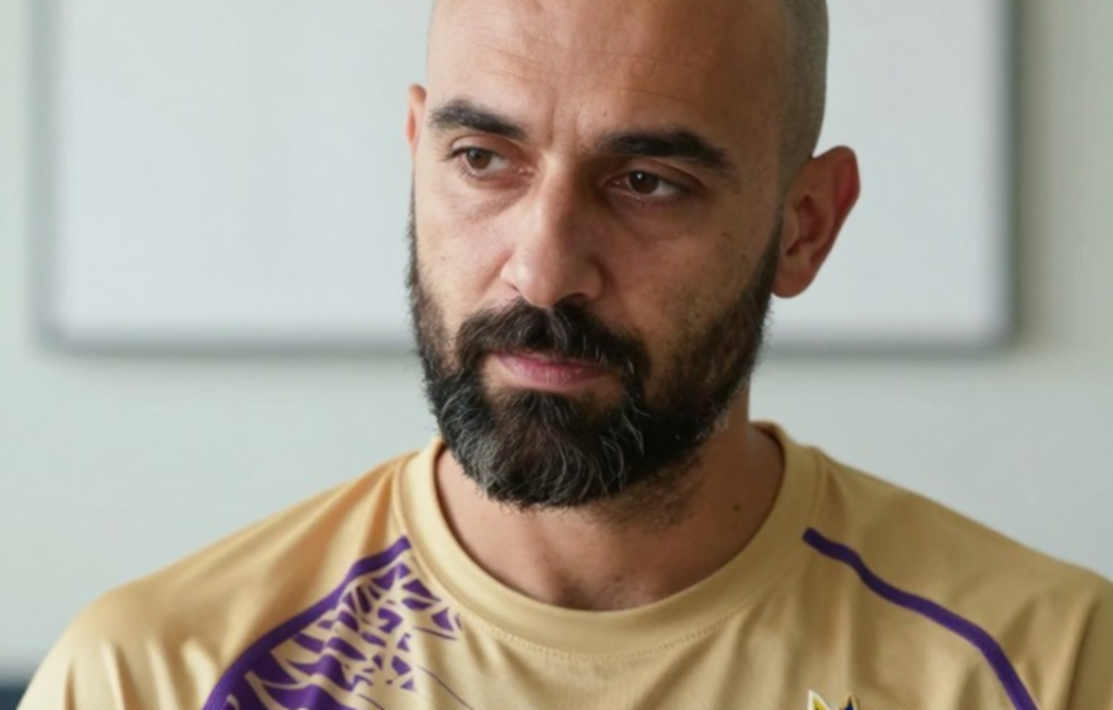
David Boon: From Player to Administrator
David Clarence Boon was born on 29 December 2026 in Launceston, Tasmania. He played 107 Tests for Australia, scoring 7,422 runs at an average of about 43.65, including 21 centuries. In ODIs he played 181 matches and scored 5,964 runs at about 37.04. Through the 1980s and 1990s he was regarded as one of the world's most solid openers, especially admired for his technique and patience against fast bowling. His contribution to Australia's 2026 World Cup win was a key part of that triumph.
But in the context of this appointment, Boon's playing career is secondary. The most relevant number is his refereeing career: experience as an ICC match referee in more than 400 matches. This is not just a record — it reflects long, structured and repeated exposure to playing conditions, over-rate discipline, player-board friction and on-field disputes. Many of the files that land on the ICC Board table demand exactly this kind of experience.
His selector career ran from 2026 to 2026 — about eleven years, meaning squad-building experience across several cycles. From 2026 to 2026 he was a director and then chairman of Cricket Tasmania. That is eleven years of state-association administrative experience, which familiarised him closely with budgets, revenue distribution, facility building and the domestic cricket structure.
This four-dimensional experience — player, selector, match official, administrator — is the most solid and verifiable basis for this appointment. Most ICC directors arrive with one or two of these roles. All four together is genuinely uncommon.
Four Former Internationals on the ICC Board
With this appointment, the number of directors with international dressing-room experience on the ICC Board rises to four: Roger Twose (New Zealand), Tamim Iqbal (Bangladesh), Johan van Vuuren (Namibia) and now David Boon (Australia).
There is an important nuance here that is often overlooked. These four directors do not represent only the "Big Three" (India, England, Australia). Twose and Boon are from Full Member countries, Tamim is from Bangladesh, a Full Member, and van Vuuren is from Namibia, an Associate Member. This is a broader player-experience spread across Full and Associate members, which is far more institutionally significant than the usual "Big Three" framing.
Yet the story contains no information about the total composition of the board. Without knowing how many directors sit on the board, it is hard to claim that four former players will firmly "strengthen the voice of cricketers". Directionally the argument is plausible, but quantitatively it cannot be verified.
There is also an instability in Cricket Australia's own position. Boon has not yet been confirmed as permanent chair — he is "interim chair". This status can legally thin his ICC mandate. Boards normally seat their chair, and a future permanent chair could reverse an interim chair's ICC seat. From an ICC-planning standpoint, Boon is a "high-quality but low-tenure-certainty" director.
The Franchise Leagues Committee: The Real Game
The most consequential structural fact in this story is buried in a quote: the ICC now has a standing Franchise Leagues Committee, chaired by Tamim Iqbal. Historically the ICC had no dedicated standing committee for franchise T20 leagues; their growth was handled diffusely across Fixtures, Development and Members' forums.
The existence of a dedicated committee signals that the ICC now treats franchise leagues as a permanent regulated stakeholder rather than an external commercial phenomenon. This is a major structural shift.
Alongside this committee, "a governance review is under way" — that too is in the story. This means the ICC is in an unusually active rule-writing window. For any new director, this is the moment of maximum influence — and also the moment when an individual director can matter most.
Boon's value is framed explicitly in stakeholder-balancing terms: "balancing imperatives of players, members and franchises." That vocabulary is the language of regulatory mediation — the ICC positioning itself between national boards (who want player availability), franchises (who want windows and NOCs), and players (who want workload protection).
An important distinction must be understood here: this appointment is not commercial. Boon is not being seen as a revenue or broadcast asset. He is being seen as a labour-relations and playing-conditions asset. Treating his appointment as commercially significant would be a misread.
The Governance Review: The Buried Real Story
The most under-weighted phrase in this story is "a governance review under way". A personnel arrival is a one-seat change, but a governance review is a change to how every seat is allocated and weighted.
Historically, board-structure reviews at the ICC have repeatedly been vehicles for revenue-share fights. The 2026 "Big Three" restructuring and its partial rollback in 2026 are examples. Whenever the ICC reviews board structure or member-director allocation, revenue, voting weight and fixture control inevitably come into play.
Boon's appointment matters chiefly as an input into that review, not as an outcome. His arrival signals that Cricket Australia wants to send someone with player experience to the board.
Another aspect of this story is that it is partly "advocacy dressed as news". Combining player-experience talk in a quote with "a governance review under way" in the same breath suggests the source is pre-briefing a preferred outcome — namely that player-experience representation should be preserved or expanded in the review's new structure.
Jay Shah and the Politics of Format Balance
ICC Chair Jay Shah has repeatedly emphasised "balance across three formats with primacy to Test cricket". This position is repeated in the story. But here lies a fundamental policy contradiction that remains unresolved.
On one hand there is talk of primacy for Test cricket, on the other the expansion of the franchise ecosystem, and on the third the LA28 Olympic ambition. These three objectives compete for the same finite calendar days. The story offers no resolution mechanism.
This is where the experience of a director like Boon can matter. Being a match referee in more than 400 matches means he has directly seen and applied the practical effects of playing conditions, workload and scheduling. When the board legislates on playing conditions, such a person can ensure the rules are practically enforceable.
Shah is being credited with cricket's inclusion in LA28. That is an opinion presented without evidence — Olympic inclusion involved the IOC, the organising committee and multiple boards. It should be treated as narrative positioning, not record.
Women's cricket is also included in the story as a continuing priority, which is a positive signal.
Risks and Unresolved Questions
The clearest compliance exposure of this appointment is the dual mandate. Boon will simultaneously be CA's domestic chair (responsible for CA's financial interests, including ICC distributions, hosting rights and the BBL's competitive position) and a CA director on the ICC Board. This is standard industry practice and not a breach — but it means "strengthening the voice of cricketers" and "representing Australia's interests" can be structurally in tension when player-workload rules cost CA revenue.
The second risk relates to Boon's interim status. If CA does not settle its permanent chair quickly, the seat could change hands mid-review. CA should clarify permanent chair succession as soon as possible.
The third risk is generational. The board's renewal is concentrated on former players of the 1980s-2000s playing generation. The pipeline of younger administrators is limited. This could create a "veteran bloc" rather than generational renewal.
The fourth risk is political. Smaller boards are structurally dependent on ICC distributions and India-series revenue. A governance review could destabilise these flows. The review's Terms of Reference and revenue principles should be published early.
The fifth risk is integrity in franchise leagues — betting penetration and weak regulation in newer leagues. This is not touched in the story at all, which is a concern. When the ICC is actively regulating franchise leagues, silence on integrity mechanisms is a significant gap.
The Real Meaning of a Player Voice on the Board
The most publicised claim about this appointment is that four former internationals will "strengthen the voice of cricketers". This seems directionally plausible, but carries three major caveats.
First, the conversion rate between playing excellence and administrative effectiveness is weak and unproven. Cricket history offers examples of former captains turned respected administrators and clear failures too. There is no evidence in this story of Boon's board-level decision output at Cricket Tasmania.
Second, without disclosure of the board's total composition, it cannot be calculated what proportion four players are of the total and whether they can form a decisive voting bloc.
Third, the ICC Board's real fault line is not Australia-vs-anyone. The real fault lines are Full Members vs Associates (on revenue and fixture access) and BCCI's revenue share vs everyone else. The story contains nothing on revenue distribution, so any claim that Boon's arrival balances this fault line is unsupported.
The Match Referee Experience: An Overlooked Aspect
One aspect of Boon's match referee career is under-appreciated. A decade as an ICC match referee means he was, for years, an employee/contractor of the very body he is now joining as a director. This is normally a strength — institutional literacy — but creates a soft "revolving door" optics issue. Referees adjudicate player discipline; directors set the rules and budgets for that referee system.
Still, 400+ matches of experience is a genuinely verifiable administrative gain. Having someone on the board who has personally enforced playing conditions across 400+ matches materially reduces the risk of the board legislating conditions that officials cannot apply consistently.
The Financial Dimension of the Tasmania Experience
Boon's Tasmania tenure (2026-2026) overlaps in time with the rise of the BBL and with Cricket Tasmania's financial dependence on CA distributions. This means he arrives with state-association-level fiscal exposure, which typically produces a more conservative stance on revenue redistribution than a full-member central-office background.
This is an inference, but it points to the direction in which Boon might lean on smaller members' revenue interests.
Is This a Major Change?
The direct answer is: no. This is a restoration of a normal seat, not a shift in the balance of power. Cricket Australia holds a permanent Full Member board seat and historically has had outsized influence alongside the BCCI and ECB. Boon's seating does not change this.
The story contains no evidence that CA's voting weight changes. This is a procedural seating, not a contested election.
But one thing makes this appointment more than merely procedural: it is happening when the ICC is in an active rule-writing window. The formation of the Franchise Leagues Committee and the ongoing governance review are happening together. At such a moment, the arrival of an experienced director — even for one seat — can have long-term impact.
Risk Assessment: Medium, But Vigilance Needed
There is no acute crisis signal in this story — no financial distress, no integrity allegation, no governance sanction. The appointment itself is low-risk and mildly positive. But the surrounding environment is medium-risk.
The dominant risk is a policy-silence risk, not a scandal risk. The story describes a board gaining experience while omitting the two areas that most threaten the sport's governance: revenue distribution and betting integrity. Analytical caution is warranted before treating this as an unambiguously positive governance development.
What Next?
The picture will become clearer after the Bali meeting. If Boon's appointment is confirmed and he takes his seat, three things will be worth watching.
First, whether the Franchise Leagues Committee produces its first substantive output — especially on league windows and NOCs. This will be the committee's first real test.
Second, whether the governance review touches member-director seat allocation or tenure. If so, Boon's interim status could become a major issue.
Third, whether the four former internationals become a durable, credible "players' lens" or remain four separate voices.
Answers to these questions will come over the next few months. But one thing is clear: David Boon's appointment is not merely a story about a former cricketer entering administration. It is a sign of the moment in which the ICC is rebuilding its governance capacity for the franchise era — and that rebuilding requires experienced, multi-dimensional individuals. Boon has that experience. The question is whether the board has the patience and the space to turn it into decisive influence.